Backflow is a plumbing problem that property owners may not notice until a device fails, a test is unsuccessful, or a plumbing system is found to have an unexpected cross-connection. The important question is not simply, “Do I need a backflow preventer?” It is also: What type of backflow risk does my property have and what level of protection does that application require?
Every property has a different plumbing configuration. A home with a lawn irrigation system may have different backflow concerns than a restaurant, office building, manufacturing facility, apartment property, or commercial building with boilers and specialized equipment.
Backflow risk can involve backsiphonage, backpressure or both. The type of connection, what is connected to the potable water supply, the degree of hazard, system pressure, and applicable requirements all play a role in determining appropriate protection.
Pennsylvania Department of Environmental Protection guidance states that the degree of protection should be appropriate to the degree of hazard and that the limitations of each backflow prevention device should be understood. Its guidance also notes that device recommendations are not intended to replace ordinances or standards established by individual water suppliers.
For property owners in West Chester, PA, understanding these factors can make it easier to recognize potential problems and know when professional backflow testing, inspection, repair, or installation may be appropriate.
What Is a Backflow Risk?
Backflow occurs when water flows in the opposite direction from its intended path and potentially allows water from a non-potable or questionable source to enter the potable water system.
The concern is created when two systems are connected in a way that could allow unwanted substances to move toward the drinking water supply. This is commonly referred to as a cross-connection.
Potential cross-connections can occur around:
- Lawn and landscape irrigation
- Garden hoses
- Boilers and heating systems
- Fire protection systems
- Commercial equipment
- Chemical systems
- Swimming pools
- Water treatment equipment
- Process equipment
- Other plumbing connections
A backflow preventer is designed to help control these risks, but the correct protection depends on the application.
What Is a Cross-Connection?
A cross-connection is a physical connection or arrangement between a potable water system and another source where an undesirable substance could potentially enter the potable water supply.
The risk can exist even when the plumbing system appears to operate normally.
For example, a hose connected to a faucet can become a potential cross-connection if its end is placed in a container containing contaminated or questionable water. Similarly, an irrigation system can create a pathway between potable water and outdoor piping.
This is why cross-connection control is an important part of backflow prevention.
Why Doesn’t Every Property Have the Same Risk?
A property owner’s backflow risk depends on what is connected to the water supply and what could potentially flow backward.
Consider two properties:
A single-family home may have a basic outdoor hose connection and lawn irrigation.
A commercial property may have irrigation, boilers, fire protection, chemical equipment, pumps, and several specialized water connections.
Both properties use potable water, but their potential cross-connections and hydraulic conditions can be very different.
That is why choosing a backflow preventer based only on the building type is not enough.
The Two Main Types of Backflow Conditions
Before determining what protection may be appropriate, it helps to understand the two primary ways backflow can occur.
Backsiphonage
Backsiphonage occurs when pressure in the potable water system drops and creates a condition that can draw water backward into the supply.
A pressure drop can occur because of events such as:
- A water main break
- Heavy water demand
- Firefighting activity
- Unexpected supply interruption
- Other conditions that reduce pressure
An irrigation connection, hose, or other submerged connection may become a concern if a backsiphonage condition occurs.
A pressure vacuum breaker is one type of backflow prevention assembly associated with applications where backsiphonage protection is needed. However, the specific application and requirements must still be evaluated before selecting a device.
Backpressure
Backpressure occurs when the pressure downstream of a connection becomes greater than the pressure in the potable water supply.
Potential sources include:
- Pumps
- Elevated tanks
- Boilers
- Pressurized equipment
- Closed-loop systems
- Commercial processes
- Differences in elevation
If downstream pressure can overcome the pressure in the potable water line, water can potentially move in the wrong direction.
This distinction is important because a device suitable for one type of backflow condition may not provide the protection required for another.
How to Identify the Backflow Risk at Your Property
Property owners can begin by asking several practical questions about their plumbing system.
Step 1: Identify Every Connection to the Potable Water Supply
Start by looking at everything connected to the property’s potable water system.
Consider whether the property has:
- Irrigation
- Fire sprinklers
- Boilers
- Heating systems
- Pools
- Commercial equipment
- Chemical equipment
- Water treatment systems
- Hose connections
- Process equipment
Don’t assume that a connection is harmless simply because it has existed for years.
Step 2: Determine What Could Enter the Water Supply
Next, consider what is present downstream of the connection.
Could the water contain:
- Fertilizer?
- Pesticides?
- Chemicals?
- Wastewater?
- Process materials?
- Biological contaminants?
- Other substances that should not enter potable water?
The potential consequences of a cross-connection help determine the degree of hazard that must be considered.
Step 3: Determine Whether Backpressure Is Possible
Ask whether the downstream system can generate pressure greater than the potable water supply.
Look for:
- Pumps
- Pressurized tanks
- Boilers
- Closed systems
- Elevated equipment
- Commercial processes
A professional evaluation may be necessary when pressure relationships are difficult to determine from a basic visual inspection.
Step 4: Determine Whether Backsiphonage Is Possible
Consider whether a pressure drop could draw water backward.
This is particularly relevant to irrigation systems, hose connections, tanks, and other arrangements where the downstream water could potentially enter the potable supply.
Step 5: Determine the Degree of Hazard
Not every cross-connection presents the same level of concern.
A professional assessment considers what could enter the potable water system and how serious the consequence could be.
Pennsylvania DEP guidance specifically emphasizes that the degree of protection should correspond to the degree of hazard.
Common Property Types and Their Backflow Risks
Residential Properties
Residential properties can have several potential cross-connections.
Common examples include:
- Garden hoses
- Irrigation systems
- Swimming pools
- Boilers
- Water treatment equipment
- Outdoor faucets
Being a residential property does not automatically mean that every connection presents the same level of risk.
If you have an irrigation system, unknown plumbing modifications, or an existing backflow preventer that has not been evaluated recently, a professional inspection can help identify potential concerns.
Commercial Properties
Commercial buildings often have more complex plumbing systems.
Restaurants, offices, retail buildings, apartment properties, medical facilities, industrial facilities, and manufacturing locations can contain multiple water connections.
Examples include:
- Commercial boilers
- Fire protection systems
- Irrigation
- Food-service equipment
- Chemical systems
- Process equipment
- Pumps
- Specialized plumbing equipment
The greater number of connections can make cross-connection identification more important.
Properties With Irrigation Systems
Irrigation is one of the most common situations where property owners encounter backflow protection.
An irrigation system can expose potable water to soil, fertilizers, pesticides, and other substances depending on how the system is configured.
Pennsylvania DEP’s guidance includes irrigation systems among the facility types considered in its recommended backflow protection framework.
If your property has irrigation, professional backflow testing services can help determine whether the existing assembly is functioning as intended.
Properties With Boilers or Heating Equipment
Boilers and heating systems can create additional backflow considerations because they may contain treated water and can involve pressure differences.
The exact protection required depends on the system design and hazard.
A property owner should not assume that a standard device is appropriate simply because another building has a similar-looking boiler system.
Properties With Fire Protection Systems
Fire protection systems can also create backflow considerations.
The appropriate protection depends on the system configuration, contents, pressure conditions, and applicable requirements.
Because fire protection plumbing can be complex, the existing assembly should be evaluated according to the actual application rather than selected based on appearance alone.
What Backflow Protection Does Your Application Require?
There is no single backflow preventer that is automatically appropriate for every property.
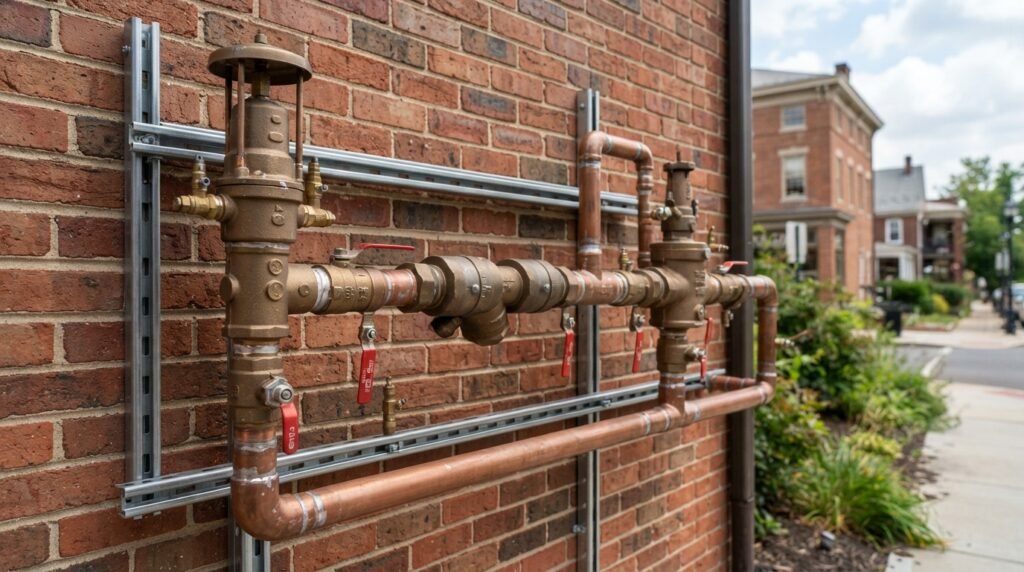
Common assemblies include pressure vacuum breakers, double check valve assemblies, and reduced pressure zone assemblies.
Pressure Vacuum Breaker (PVB)
A Pressure Vacuum Breaker, commonly called a PVB, is designed for applications where protection against backsiphonage is required.
It is a testable assembly and is commonly associated with irrigation applications.
A PVB does not provide the same type of protection against backpressure as assemblies designed for both backpressure and backsiphonage.
Therefore, the presence of an irrigation system alone does not mean a PVB is automatically the correct choice. The complete application must be evaluated.
If you already have a device installed but are unsure of its condition, a professional backflow device inspection can help identify potential problems.
Double Check Valve Assembly (DCVA)
A Double Check Valve Assembly, or DCVA, uses two independently acting check valves to help prevent reverse flow.
Pennsylvania DEP guidance identifies DCVA as a backflow prevention device and recommends it for certain non-health-hazard applications.
However, the correct application depends on the actual hazard and system conditions.
A DCVA should not be selected simply because it is common or because it is already installed on a neighboring property.
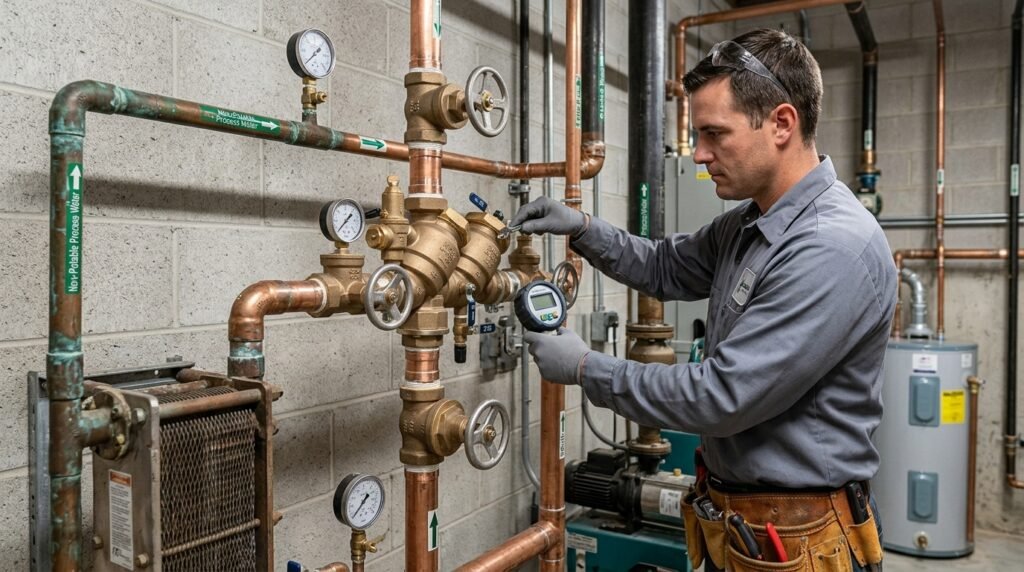
Reduced Pressure Zone (RPZ) Assembly
A Reduced Pressure Zone, or RPZ, assembly uses two check valves with a relief mechanism between them.
RPZ assemblies are designed to provide protection against both backsiphonage and backpressure and are associated with applications requiring a higher degree of protection.
Pennsylvania DEP’s guidance identifies RPZ devices among accepted backflow prevention devices and discusses their use in relation to the degree of hazard.
RPZ installation also requires appropriate consideration of drainage, accessibility, maintenance, freezing conditions, and the manufacturer’s installation requirements.
For new or replacement installations, professional backflow installation services can help address the physical installation requirements of the selected assembly.
Why You Shouldn’t Choose a Backflow Preventer by Device Name Alone
One of the most common mistakes property owners can make is choosing a backflow preventer based on a simple rule.
For example:
“I have irrigation, so I automatically need a PVB.”
Or:
“My building is commercial, so I automatically need an RPZ.”
These statements can be too simplistic.
The appropriate protection depends on the actual application.
A proper evaluation considers:
- The cross-connection
- The degree of hazard
- Whether backsiphonage is possible
- Whether backpressure is possible
- What substances are present downstream
- System pressure
- Plumbing configuration
- Installation conditions
- Applicable water supplier requirements
- Manufacturer requirements
- Testing and maintenance requirements
Pennsylvania DEP’s current cross-connection guidance specifically notes that its device recommendation table is only a partial list and is not intended to replace ordinances or standards developed by individual water suppliers.
That means property owners should verify the requirements applicable to their specific water system rather than relying on a generic online recommendation.
Backflow Risk Assessment: A Simple Property Owner Checklist
If you are unsure about your property’s backflow risk, start with these questions:
- What connects to my potable water supply?
- Does the property have irrigation?
- Is there a boiler or heating system?
- Are chemicals used anywhere in the connected system?
- Is there commercial or industrial equipment?
- Can downstream pressure exceed supply pressure?
- Could a pressure drop create backsiphonage?
- What type of backflow preventer is currently installed?
- When was it last tested?
- Has it ever failed?
- Is the device accessible for testing and maintenance?
- Have plumbing modifications changed the system?
- Does the applicable water supplier have additional requirements?
If several of these questions cannot be answered, that is a good reason to have the system professionally evaluated.
Signs Your Property May Need a Backflow Inspection
You may want to arrange an inspection if:
- You don’t know what type of device is installed.
- The backflow preventer is leaking.
- The assembly has failed testing.
- The device shows corrosion or physical damage.
- Test records are missing.
- An irrigation system was recently installed.
- Plumbing has been modified.
- New equipment was connected to the water supply.
- The device is difficult to access.
- The property’s water-use configuration has changed.
- You are unsure whether existing protection matches the application.
A professional backflow inspection can help identify the existing assembly, inspect its condition, and determine whether further testing or service is appropriate.
What Happens During a Professional Backflow Risk Evaluation?
A professional evaluation generally starts with understanding the property’s plumbing configuration.
Review the Plumbing Configuration
The technician looks at how potable water is distributed and what equipment or systems are connected to it.
Identify Cross-Connections
Potential connections between potable and non-potable systems are identified.
Evaluate Potential Backflow Conditions
The system is considered for both backsiphonage and backpressure conditions.
Determine the Degree of Hazard
The substance or source that could potentially enter the potable water system is considered when evaluating the level of protection needed.
Evaluate Existing Protection
If a backflow preventer is already installed, its type, location, condition, accessibility, and suitability can be reviewed.
Test the Assembly When Applicable
Where a testable assembly is installed and testing is required or appropriate, field testing can help determine whether it is operating within the applicable performance requirements.
Pennsylvania DEP training materials specifically include testing and troubleshooting of RP, DCVA, and PVB assemblies as part of backflow prevention training.
Recommend the Appropriate Next Step
Depending on the findings, the next step may involve:
- No immediate action
- Testing
- Maintenance
- Repair
- Replacement
- New installation
- Additional evaluation
The goal should be to address the actual risk rather than automatically replace a device.
What If Your Existing Backflow Preventer Is the Wrong Type?
Sometimes a property already has a backflow preventer but the plumbing system has changed.
For example, a building may have:
- Added new equipment
- Installed irrigation
- Modified a boiler system
- Added chemical treatment
- Changed the use of a space
- Altered water pressure conditions
- Reconfigured plumbing
These changes can affect the original backflow risk.
A device can also have problems because of corrosion, internal component wear, freezing, improper installation, or lack of maintenance.
In these situations, the appropriate process is generally:
Assess → Test → Diagnose → Repair or Replace → Retest
A failed device does not automatically mean that the entire assembly must be replaced. The condition, application, parts availability, suitability, and applicable requirements should all be considered.
If repair is appropriate, backflow repair services can address malfunctioning or damaged assemblies.
Backflow Risk Considerations for West Chester, PA Properties
Property owners in West Chester should consider both the physical plumbing system and the requirements that apply to their particular property and water service.
The Borough of West Chester states that its Building & Housing Department enforces the Pennsylvania Uniform Construction Code and Borough Code and handles construction permitting and related inspections.
For backflow protection specifically, property owners should also confirm the requirements of the applicable water supplier and any other authority that governs the property.
This is important because Pennsylvania DEP guidance itself explains that its recommended device table is not intended to replace individual water-company ordinances or standards.
If you are planning a plumbing modification, installing irrigation, replacing a backflow assembly, or dealing with a failed test, verifying the applicable requirements before work begins can help prevent unnecessary changes later.
When Should You Call a Backflow Professional?
Professional assistance can be especially useful when:
- You do not know what type of backflow preventer you have.
- Your device has failed a test.
- The assembly is leaking.
- You are installing an irrigation system.
- You are modifying plumbing.
- New commercial equipment is being connected.
- You suspect backpressure.
- You are concerned about backsiphonage.
- Your existing device is damaged.
- You need testing or inspection documentation.
- You are unsure whether your current protection matches the application.
The earlier a potential cross-connection or device problem is identified, the easier it can be to determine the appropriate next step.
How Professional Backflow Solutions Can Help
Professional Backflow Solutions provides backflow-related services for residential and commercial properties in West Chester, PA and surrounding areas.
Services can include:
- Backflow testing
- Backflow inspection
- Backflow installation
- Backflow repair
- Backflow device evaluation
- Commercial backflow services
- Emergency backflow assistance
You can learn more about available backflow services in West Chester, PA and determine which service best matches your situation.
If you are dealing with a failed assembly, leaking device, installation question, or uncertain plumbing configuration, getting the system evaluated can help you understand what needs attention before making a repair or replacement decision.
Frequently Asked Questions About Backflow Risk
How do I know what type of backflow risk my property has?
Start by identifying all connections to the potable water supply and determine what could potentially enter the water system. Then consider whether backpressure or backsiphonage is possible and what degree of hazard the connection presents. A professional evaluation may be necessary for complex systems.
What is the difference between backpressure and backsiphonage?
Backpressure occurs when downstream pressure becomes greater than the pressure in the potable water supply. Backsiphonage occurs when a pressure drop creates a condition that can draw water backward toward the potable water system.
Does every property need a backflow preventer?
Not necessarily the same type of backflow protection. The need for protection and the appropriate method depend on the property’s cross-connections, degree of hazard, plumbing configuration, and applicable requirements.
Does an irrigation system create a backflow risk?
An irrigation system can create a potential cross-connection between potable water and outdoor piping. The appropriate protection depends on the system configuration and applicable requirements.
Can a residential property have a health-hazard backflow risk?
Yes. Property type alone does not determine the degree of hazard. The actual connection and what could potentially enter the potable water supply are important considerations.
How do I know whether I need a PVB, DCVA, or RPZ?
The answer depends on the actual application. Consider the type of cross-connection, degree of hazard, possibility of backsiphonage or backpressure, system configuration, and applicable water supplier requirements.
Can a backflow preventer protect against both backpressure and backsiphonage?
Some assemblies are designed to address both conditions, while others have more limited applications. The appropriate device must be selected according to the actual risk and applicable requirements.
What happens if my backflow preventer fails?
The assembly should be evaluated to determine why it failed. Depending on its condition and suitability, the next step may be repair, replacement, or another corrective action followed by appropriate retesting.
Should I repair or replace a failed backflow preventer?
Not every failed device automatically needs replacement. The condition of the assembly, availability of serviceable components, device suitability, installation, and applicable requirements should be considered.
How often should a backflow preventer be tested?
Testing frequency can depend on the applicable water supplier, program requirements, assembly type, and jurisdiction. Property owners should follow the requirements that apply to their water system rather than relying on a universal schedule.
Does adding new plumbing equipment change my property’s backflow risk?
It can. Adding equipment or modifying plumbing can create new cross-connections or change hydraulic conditions. A new evaluation may be appropriate after significant plumbing changes.
Can a professional identify my backflow risk and existing device?
Yes. A qualified professional can inspect the plumbing configuration, identify existing backflow protection, evaluate potential cross-connections, and determine whether additional testing or service is appropriate.
Does West Chester, PA have specific backflow protection requirements?
Requirements can depend on the applicable authority and water supplier. West Chester’s Building & Housing Department enforces the Pennsylvania Uniform Construction Code and Borough Code, while Pennsylvania DEP guidance notes that water-supplier standards or ordinances can also affect device selection.
What should I do if I don’t know what type of backflow preventer I have?
Do not assume the device type or replace it based only on appearance. Have the assembly identified and evaluated so the property’s actual backflow risk and applicable protection requirements can be considered.
Final Takeaway: Identify the Risk Before Choosing the Protection
The right backflow protection starts with understanding the risk, not simply choosing a device.
A useful way to think about the process is:
Cross-connection → Potential hazard → Backflow condition → Required protection → Testing or inspection → Ongoing maintenance
Your property may have a risk from backsiphonage, backpressure, or both. The degree of hazard, plumbing configuration, connected equipment, and applicable requirements all influence what protection is appropriate.
For West Chester property owners, the safest approach is to identify the actual plumbing conditions first and then determine what protection is appropriate for that application.
If you are unsure what type of backflow risk your property has, whether your existing device is appropriate, or what to do after a failed test, a professional backflow evaluation can provide a clearer path forward.