A healthy, green lawn requires regular watering, and an automatic irrigation system makes maintaining your landscape much easier. However, many homeowners do not realize that their lawn sprinkler system can create a potential connection between the clean drinking water supply and water that may contain contaminants.
Fertilizers, pesticides, soil, and other substances can enter irrigation lines. If water pressure changes, contaminated water may travel backward through the plumbing system and potentially enter the property’s drinking water supply. This is known as backflow.
That is why proper backflow prevention and regular testing are important for residential irrigation systems. Homeowners in West Chester, PA, and surrounding Chester County communities should understand how their irrigation systems are protected and whether their water supplier requires annual backflow testing.
In this guide, we explain how irrigation backflow prevention works, which devices are commonly used, what happens during a professional test, and how to maintain reliable protection for your home’s water supply.
Why Do Lawn Irrigation Systems Need Backflow Prevention?
Lawn irrigation systems use water from a property’s plumbing supply to operate sprinkler heads, underground pipes, and watering equipment. Although this water is clean when it enters the irrigation system, it can become exposed to substances present in the surrounding environment.
For example, sprinkler heads may come into contact with lawn chemicals, fertilizers, soil, animal waste, and standing water. Without appropriate backflow protection, these substances could potentially enter the drinking water system if water begins flowing in the wrong direction.
A backflow prevention device helps prevent this reverse flow and protects the potable water supply.
How Does Backflow Happen in an Irrigation System?
Backflow occurs when water moves in the opposite direction from its intended flow. Two common conditions can cause this problem.
Back-siphonage: This happens when pressure in the public water supply or property plumbing drops below the pressure in the irrigation system. A water main break, heavy water demand, or firefighting activity can create conditions that contribute to back-siphonage.
Backpressure: This happens when pressure on the irrigation or downstream side becomes greater than the pressure in the incoming water supply. Pumps or other pressurized equipment can create this condition.
Both situations can allow water from an irrigation system to move toward the clean water supply if the plumbing connection is not properly protected.
What Contaminants Can Enter Through an Irrigation System?
Lawn irrigation systems operate outdoors, where sprinkler components and water lines may be exposed to different contaminants.
Potential sources include:
- Fertilizers used to promote lawn growth.
- Pesticides and other lawn treatment chemicals.
- Soil, dirt, and organic debris.
- Bacteria from animal waste.
- Contaminated standing water around sprinkler heads.
These substances can affect water quality if they enter a potable water system through an unprotected cross-connection.
How Does a Backflow Preventer Protect Your Drinking Water?
A backflow preventer is a mechanical assembly designed to prevent water from flowing backward through a plumbing connection.
Depending on its design, it uses check valves, air-inlet mechanisms, or a reduced-pressure zone to help prevent contaminated water from entering the clean water supply.
Proper installation, maintenance, and testing help ensure that the assembly continues providing the protection required for its application.
Does Your Lawn Irrigation System Require Annual Backflow Testing?
In many situations, yes. Lawn irrigation systems connected to a public water supply commonly require an approved backflow prevention assembly, and applicable testable assemblies are often subject to annual testing.
However, the exact requirements depend on the property’s water supplier, local cross-connection control program, device type, and installation conditions.
Pennsylvania’s Safe Drinking Water regulations address cross-connection control under 25 Pa. Code §109.709. The regulation makes customers responsible for eliminating cross-connections or providing acceptable backflow protection to prevent contamination from back-siphonage and backpressure.
It also gives water suppliers authority to discontinue service after reasonable notice when customers fail to meet applicable requirements.
Pennsylvania American Water, for example, maintains a cross-connection control program that requires applicable backflow prevention assemblies to be tested annually.
For homeowners in West Chester and surrounding areas, it is important to confirm the testing schedule directly with the water supplier serving the property. Do not assume that every residential sprinkler system follows an identical testing requirement.
When Should You Schedule Irrigation Backflow Testing?
Consider arranging testing when:
- Your water supplier sends an annual testing notification.
- Your backflow prevention assembly reaches its required testing date.
- A new irrigation system or backflow assembly has been installed.
- The existing device has undergone repairs or relocation.
- Your property has experienced problems with its backflow prevention equipment.
- Your water supplier requests an additional inspection or test.
Scheduling testing before the beginning of the irrigation season can help homeowners identify problems before regular lawn watering starts.
If you are unsure about your property’s testing requirements, reviewing your water supplier’s instructions and arranging a professional evaluation is a sensible first step.
Which Backflow Preventer Is Used in Lawn Irrigation Systems?
Different irrigation systems require different types of backflow protection. The correct assembly depends on the property’s potential cross-connection hazard, system design, installation conditions, and local approval requirements.
Here are three common types of backflow prevention assemblies.
Pressure Vacuum Breaker (PVB)
A Pressure Vacuum Breaker is commonly used in certain lawn irrigation applications.
It contains a check valve and an air-inlet valve designed to help prevent back-siphonage. When properly installed and maintained, it helps prevent irrigation water from flowing backward into the potable water supply.
A PVB has specific installation requirements, including elevation and protection limitations. It does not provide protection against backpressure, so it is not appropriate for every irrigation system.
Double Check Valve Assembly (DCVA)
A Double Check Valve Assembly contains two independently operating check valves.
These valves help prevent reverse water flow through the assembly. DCVA devices are used in applications where the required level of protection and local approval permit their use.
They are not automatically suitable for every irrigation system, particularly where a higher level of hazard protection is necessary.
Reduced Pressure Zone Assembly (RPZ)
A Reduced Pressure Zone assembly provides a higher level of backflow protection through two check valves and an intermediate reduced-pressure zone with a relief valve.
If certain operating conditions occur, the relief valve can discharge water to help prevent contaminated water from moving into the potable supply.
RPZ assemblies may be required for applications involving higher hazards, depending on the water supplier’s requirements and system conditions.
Homeowners should not choose a backflow preventer based only on its price or appearance. A qualified professional can help determine which approved assembly is appropriate.
To understand the differences between these devices in more detail, read our guide to PVB vs. DCVA vs. RPZ backflow preventers.
What Happens During a Professional Irrigation Backflow Test?
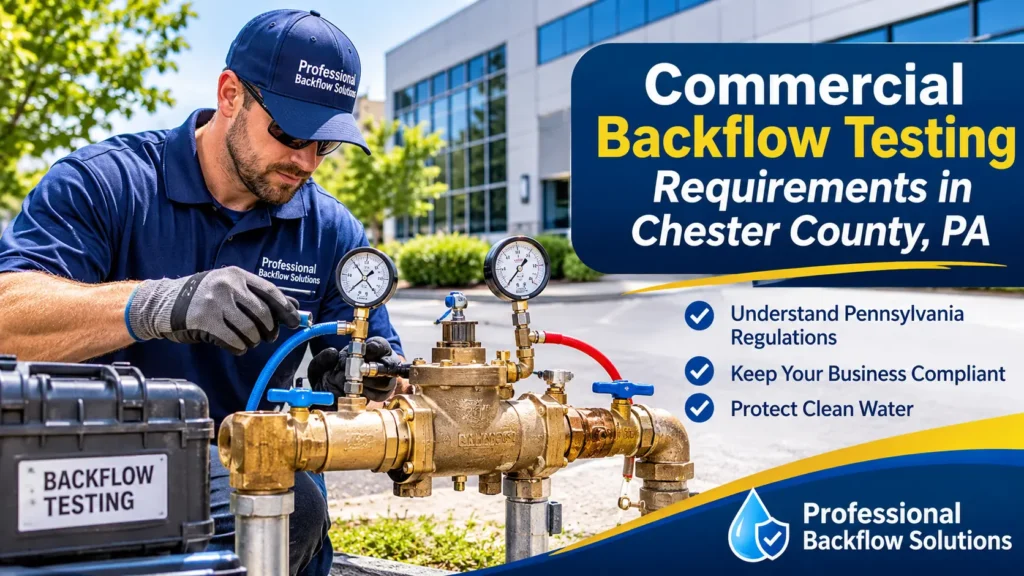
A professional backflow test evaluates whether the prevention assembly is operating within its required performance specifications.
Unlike a simple visual inspection, a proper performance test uses specialized differential pressure testing equipment to evaluate the internal components.
Here is what homeowners can generally expect.
Step 1: Identifying the Backflow Prevention Device
The technician identifies the installed assembly and reviews its configuration, location, and accessibility.
This helps determine the appropriate testing procedure for the specific device.
Step 2: Inspecting the Assembly
The technician examines the assembly for visible damage, corrosion, leaks, and other signs of deterioration.
Connections, shutoff valves, and accessible components may also be checked for apparent problems.
Step 3: Performing the Backflow Performance Test
The technician connects specialized test equipment to the appropriate test ports.
The equipment measures differential pressure and evaluates how the assembly’s internal components perform under the required test conditions.
The testing procedure varies depending on whether the property uses a PVB, DCVA, RPZ, or another approved assembly.
Step 4: Reviewing the Test Results
After completing the measurements, the technician determines whether the assembly passes or fails the applicable testing criteria.
If the device fails, the technician can identify potential mechanical problems and explain the recommended next steps.
Step 5: Completing the Test Report
The test results are documented in a backflow test report.
Depending on the local water supplier’s program, the report may need to be submitted through an online reporting system or directly to the appropriate authority.
Keeping copies of previous reports helps homeowners maintain useful records of their backflow device’s testing and maintenance history.
For professional assistance, explore our backflow testing services.
What Happens If Your Irrigation Backflow Preventer Fails Its Test?
A failed backflow test means the assembly did not meet the required performance criteria during testing.
It does not necessarily mean the entire irrigation system needs replacement. In many situations, the problem may involve one or more internal components that can be repaired.
However, a failed device should not be ignored because it may no longer provide the required level of protection.
Common Reasons an Irrigation Backflow Test Fails
Several mechanical issues can affect backflow prevention equipment, including:
- Worn or damaged internal rubber components.
- Debris buildup inside check valves.
- Corrosion and mineral deposits.
- Damaged or improperly operating relief valves.
- Leaking shutoff valves.
- Internal wear caused by age and regular use.
These problems can affect pressure readings and prevent the assembly from operating correctly.
Can a Failed Backflow Preventer Be Repaired?
Yes. Some failed assemblies can be restored through professional repairs.
Depending on the problem, a technician may recommend cleaning, adjusting, or replacing specific internal components.
The appropriate repair depends on the assembly’s condition and the manufacturer’s specifications.
When Should You Replace the Backflow Prevention Assembly?
Replacement may be the better option when the assembly has extensive corrosion, severe internal damage, repeated failures, or other problems that make reliable repairs impractical.
The replacement device must meet the property’s applicable protection requirements and receive any necessary approval.
Why Is Retesting Important After Repairs?
After repairs, the assembly should be tested again to verify that it meets the required performance criteria.
This step helps confirm that the problem has been corrected and provides updated documentation when required by the water supplier.
If your irrigation assembly is leaking or failing its performance test, our backflow repair services can help you understand the available repair options.
How Can West Chester Homeowners Prepare for an Irrigation Backflow Test?
Preparing your property before a scheduled appointment can make the testing process easier.
Here are a few practical steps homeowners can follow.
Locate Your Backflow Prevention Device
Find the backflow assembly connected to your lawn irrigation system.
It may be installed near the water service connection, outdoors near the irrigation piping, or in another approved location.
If you cannot locate it, check previous installation documents or contact the professional who installed the system.
Keep the Assembly Accessible
Remove unnecessary obstacles around the device.
Overgrown plants, landscaping materials, outdoor furniture, and stored equipment can make it difficult for a technician to access the assembly.
Keeping the surrounding area clear can help avoid unnecessary delays.
Check for Visible Leaks
Before the appointment, look for visible water discharge, damaged piping, or unusual moisture around the backflow assembly.
Do not attempt to disassemble or adjust internal components yourself.
Gather Previous Test Reports
If you have previous backflow testing records, keep them available.
These documents can provide useful information about the device’s maintenance history and earlier test results.
Schedule Testing Before Irrigation Season
Spring is a convenient time for many homeowners to arrange irrigation system maintenance and backflow testing.
Scheduling ahead of time allows you to identify potential problems before regular sprinkler use begins.
However, always follow your actual testing deadline rather than waiting for a particular season.
Why Is Professional Backflow Testing Important for Properties in West Chester, PA?
West Chester homeowners depend on clean water for drinking, cooking, cleaning, and everyday activities. Proper backflow prevention helps protect that water supply from potential contamination through cross-connections.
Professional testing offers several important benefits.
Protects drinking water: Properly functioning backflow assemblies help prevent contaminated irrigation water from entering the potable water supply.
Identifies mechanical problems: Testing can reveal issues involving check valves, relief valves, and other internal components.
Supports compliance: Following your water supplier’s applicable testing requirements helps you maintain the required backflow protection for your property.
Helps prevent unexpected problems: Identifying device issues early can make it easier to plan necessary maintenance and repairs.
Maintains testing records: Professional testing provides documentation that may be required by your water supplier.
These considerations are important for homeowners throughout West Chester, Downingtown, Exton, Malvern, Phoenixville, Chesterbrook, and other surrounding Chester County communities.
Because local water suppliers may have different cross-connection control procedures, property owners should always verify their specific requirements.
Why Choose Professional Backflow Solutions for Irrigation Backflow Testing?
Maintaining an irrigation system involves more than keeping sprinkler heads and underground pipes in good condition. Its backflow prevention assembly also needs appropriate protection, inspection, and testing.
Professional Backflow Solutions provides backflow services in West Chester, PA, and surrounding communities, helping residential and commercial property owners maintain reliable backflow prevention systems.
Our services include:
- Backflow testing for residential and commercial properties.
- Backflow device inspections and troubleshooting.
- Backflow preventer installation.
- Backflow device repairs and maintenance.
- Assistance with backflow testing documentation.
Whether you need routine testing, help with a failed assembly, or a new backflow prevention device, our team can help you understand the available service options.
Explore our backflow inspection services and backflow installation services to learn more.
Keep Your Irrigation System’s Backflow Protection in Check
Do not wait until you receive a testing notice or discover a problem with your sprinkler system.
Understanding your water supplier’s requirements and arranging appropriate professional testing can help protect your drinking water and keep your irrigation system properly maintained.
Contact Professional Backflow Solutions to discuss your backflow testing, inspection, repair, or installation needs in West Chester, PA, and surrounding areas.
Protect your water supply with professional backflow services.