Outdoor faucets are among the most frequently used plumbing fixtures around residential properties. Whether you are watering your garden, washing your car, filling a swimming pool, or cleaning outdoor surfaces, these water connections make everyday tasks easier. However, many homeowners overlook an important safety concern: the possibility of backflow.
A garden hose connected to an outdoor faucet can create a potential cross-connection between your home’s clean drinking water supply and contaminated water from outside. Under certain pressure conditions, water can flow backward through the plumbing system, potentially introducing unwanted substances into the potable water supply.
For homeowners in West Chester and surrounding Chester County communities, understanding outdoor faucet backflow prevention is an important part of maintaining a safe residential plumbing system.
But how does this happen, and does your outdoor faucet have the right protection?
Let’s explore the risks, available prevention devices, and practical steps you can take to protect your household water supply.
What Is Backflow and How Can It Affect Your Outdoor Faucet?
Backflow occurs when water flows in the opposite direction from its intended path. In a typical residential plumbing system, clean water travels from the public water supply into your home. However, changes in water pressure can sometimes cause water from an external connection to move backward into the plumbing system.
An outdoor faucet connected to a garden hose can create a potential pathway for this problem.
For example, imagine leaving a garden hose submerged in a bucket containing dirty water, cleaning solutions, or lawn chemicals. If the water pressure in your home’s plumbing suddenly drops, contaminated water could potentially be pulled backward through the hose and into the drinking water system if adequate backflow protection is not present.
Understanding Back-Siphonage
Back-siphonage happens when water pressure in the supply line drops below the pressure in the connected hose or external source.
This can happen because of:
- A water main break or maintenance work.
- Heavy water demand in the surrounding area.
- Firefighting activities that cause a sudden pressure drop.
- Other unexpected changes in the municipal water distribution system.
When this happens, the reduced pressure can create a suction effect that pulls water backward through an unprotected connection.
Understanding Backpressure
Backpressure occurs when pressure from an external source becomes greater than the pressure in the household water supply.
For instance, certain pumps, elevated water containers, or pressurized systems can create conditions that force water in the opposite direction.
Both back-siphonage and backpressure are important considerations when evaluating cross-connections in residential plumbing.
Common Outdoor Faucet Situations That Can Create Backflow Risks
Many everyday outdoor activities can introduce potential backflow hazards. Understanding these situations helps homeowners recognize why proper protection matters.
1. Garden Hoses Submerged in Buckets or Containers
Leaving a garden hose submerged in a bucket of dirty water is a common example of a potential backflow hazard.
The water may contain soil, bacteria, cleaning residue, or other unwanted substances. If back-siphonage occurs, this water could enter the connected plumbing system.
Always keep the hose outlet above the water level when filling containers.
2. Connecting Garden Hoses to Chemical Sprayers
Homeowners frequently use hose-connected equipment to apply fertilizers, pesticides, weed killers, and other lawn care products.
These products may contain substances that should never enter the household drinking water supply.
A suitable backflow prevention device helps protect against reverse water flow when using these connections. Always follow the equipment manufacturer’s instructions and applicable plumbing requirements.
3. Filling Swimming Pools and Hot Tubs
Filling swimming pools and hot tubs with a garden hose may create a potential cross-connection, particularly when the hose is placed below the water level.
Pool water can contain chlorine, cleaning products, and other chemicals.
Homeowners should use appropriate filling arrangements and ensure the hose outlet maintains an adequate separation from the pool water, in accordance with applicable requirements.
4. Washing Vehicles and Outdoor Cleaning
Garden hoses are commonly used with soap dispensers, cleaning attachments, and pressure-washing equipment.
During these activities, hoses may come into contact with dirty water, detergents, and cleaning solutions.
If a suitable backflow prevention device is missing or damaged, these connections may create an unnecessary risk to the potable water supply.
5. Garden Irrigation and Sprinkler Connections
Residential irrigation systems can create additional cross-connection concerns.
Sprinkler systems may come into contact with soil, standing water, fertilizers, and other substances. Depending on the system design and hazard level, appropriate backflow prevention equipment may be necessary.
Homeowners should not assume that a standard outdoor faucet attachment provides sufficient protection for an entire irrigation system.
Does Your Outdoor Faucet Need a Backflow Preventer?
An outdoor faucet connected to a garden hose can create a backflow risk, which is why appropriate protection is important.
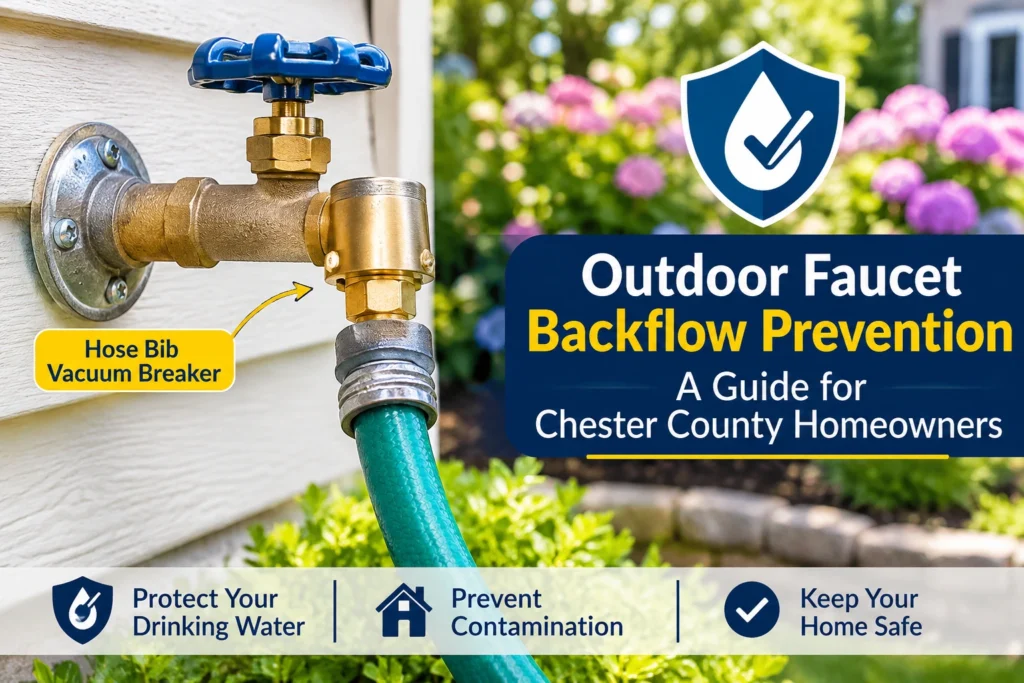
A hose bib vacuum breaker or hose connection vacuum breaker is commonly used to help prevent back-siphonage through outdoor hose connections.
Some modern outdoor faucets already include built-in backflow protection. Others require a separate device attached to the faucet outlet.
The correct solution depends on the faucet design, plumbing arrangement, potential hazard, and applicable plumbing requirements.
What Is a Hose Bib Vacuum Breaker?
A hose bib vacuum breaker is a small plumbing device designed to help prevent contaminated water from flowing backward into the drinking water supply through an outdoor hose connection.
It is commonly installed at the outlet of an exterior faucet.
Its main purpose is to protect against back-siphonage when water pressure drops.
Some common characteristics include:
- A compact design that attaches to an outdoor faucet.
- A connection point for a garden hose.
- An internal mechanism that helps prevent reverse water flow.
- Protection intended for suitable hose connection applications.
However, not every vacuum breaker is appropriate for every backflow hazard. Homeowners should choose a device that meets the requirements of their particular plumbing application.
What Is a Hose Connection Vacuum Breaker?
A hose connection vacuum breaker is a type of backflow prevention device installed on a hose bib or hose connection.
It helps prevent contaminated water from being siphoned backward into the potable water supply.
These devices are especially relevant for residential outdoor faucets that regularly connect to garden hoses.
Can a Standard Outdoor Faucet Prevent Backflow?
Not necessarily.
Some outdoor faucets are manufactured with integral vacuum breakers, while others do not provide built-in backflow protection.
Even when a protective device is present, it should be checked for damage, deterioration, and proper installation.
If you are unsure whether your outdoor faucet has adequate protection, a plumbing professional can help identify the existing device and determine whether additional protection is necessary.
For more information about choosing appropriate protection, explore our backflow preventer installation services.
Signs Your Outdoor Faucet May Not Have Proper Backflow Protection
Homeowners do not always know whether their outdoor plumbing connections have adequate backflow protection.
Although the following signs do not automatically mean backflow is occurring, they can indicate that your outdoor faucet needs attention.
Watch for these potential warning signs:
- No visible vacuum breaker: Your outdoor faucet has no obvious hose connection protection, and you are unsure whether it has an integral device.
- Damaged protective attachment: The vacuum breaker appears cracked, corroded, loose, or physically damaged.
- Frequent leaks: Water escapes around the faucet connection or backflow prevention attachment.
- Unprotected chemical connections: Garden hoses are regularly connected to fertilizer sprayers or chemical dispensing equipment without appropriate protection.
- Submerged garden hoses: A hose is frequently left underwater in buckets, pools, or other containers.
- Older outdoor plumbing: Your home’s outdoor plumbing has not been evaluated since previous renovations or modifications.
Do not wait until a problem becomes serious. Addressing potential cross-connections early can help protect your household plumbing system.
How to Protect Your Home’s Drinking Water From Outdoor Faucet Backflow
Preventing backflow does not always require complicated plumbing work. Several practical precautions can help reduce unnecessary risks around your property.
Install the Appropriate Hose Bib Vacuum Breaker
A properly selected hose bib vacuum breaker can help protect outdoor faucet connections against back-siphonage.
Before installation, verify that the device is suitable for your faucet and intended application.
Some plumbing arrangements require a different type of backflow prevention assembly, so a simple hose connection device should not be treated as a universal solution.
Never Leave Garden Hoses Submerged
Avoid leaving garden hoses underwater in buckets, swimming pools, or containers filled with chemicals or cleaning solutions.
Keep the hose outlet above the water level whenever possible.
This simple habit helps reduce the possibility of creating an unwanted cross-connection.
Use Proper Protection When Applying Lawn Chemicals
Fertilizers, pesticides, and weed-control products should be handled carefully.
When using hose-connected chemical sprayers, make sure the plumbing connection has suitable backflow protection.
Follow the equipment manufacturer’s instructions and never assume that an ordinary garden hose connection is automatically safe.
Inspect Outdoor Plumbing Connections Regularly
Make a habit of visually checking your outdoor faucets and hose connections.
Look for:
- Leaks around faucet connections.
- Corrosion or physical damage.
- Missing or deteriorated vacuum breakers.
- Loose hose attachments.
- Signs of improper plumbing modifications.
These basic checks can help identify visible problems before they become more serious.
Schedule Professional Backflow Inspection When Needed
If your property has an irrigation system, swimming pool connection, or other potentially hazardous plumbing arrangement, consider having the setup professionally evaluated.
A qualified professional can help determine which backflow prevention device is appropriate and whether an existing testable assembly needs maintenance or testing.
Learn more about our professional backflow inspection services to understand how proper inspection supports residential water safety.
When Should You Schedule Professional Backflow Testing?
Backflow testing is an important part of maintaining certain residential and commercial plumbing systems.
However, it is important to understand that not every outdoor faucet attachment requires the same type of testing.
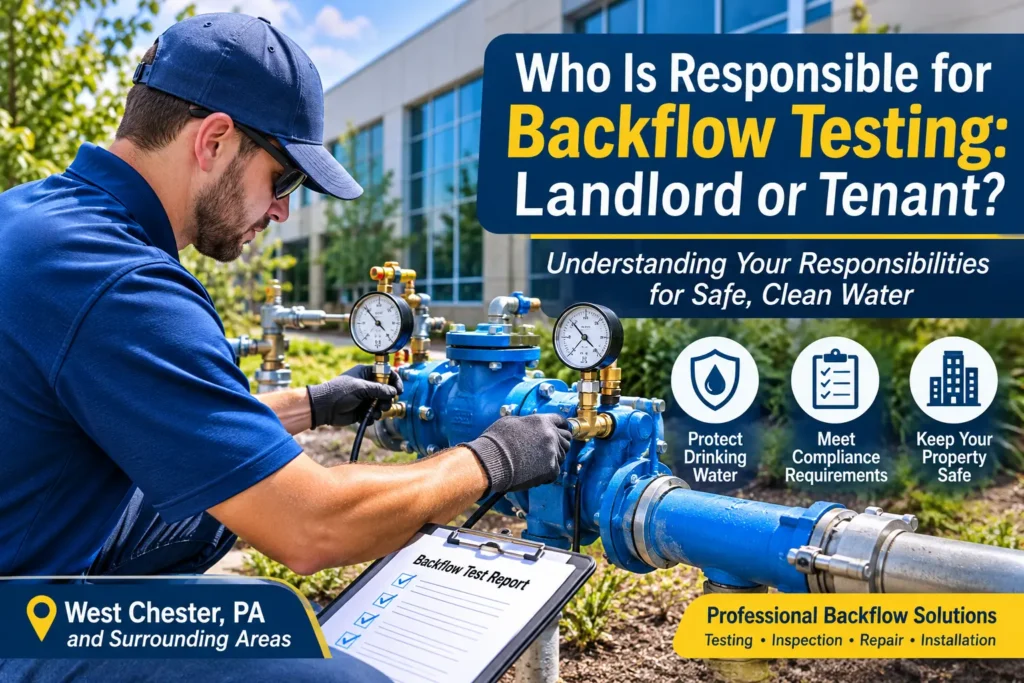
A simple hose bib vacuum breaker is different from a testable backflow prevention assembly, such as a Reduced Pressure Zone (RPZ) assembly or Double Check Valve Assembly (DCVA).
Professional testing is particularly important when your property has a testable assembly that is subject to periodic testing requirements.
You may need to arrange professional backflow testing when:
- Your water supplier sends a backflow testing notification.
- Your property has an installed testable backflow prevention assembly.
- An existing assembly has been repaired or replaced.
- A new backflow prevention assembly has been installed and requires testing.
- Your irrigation or other plumbing system has a testable device requiring periodic evaluation.
Testing frequency and documentation requirements depend on the applicable water supplier, local regulations, and device type.
What Does a Professional Backflow Test Involve?
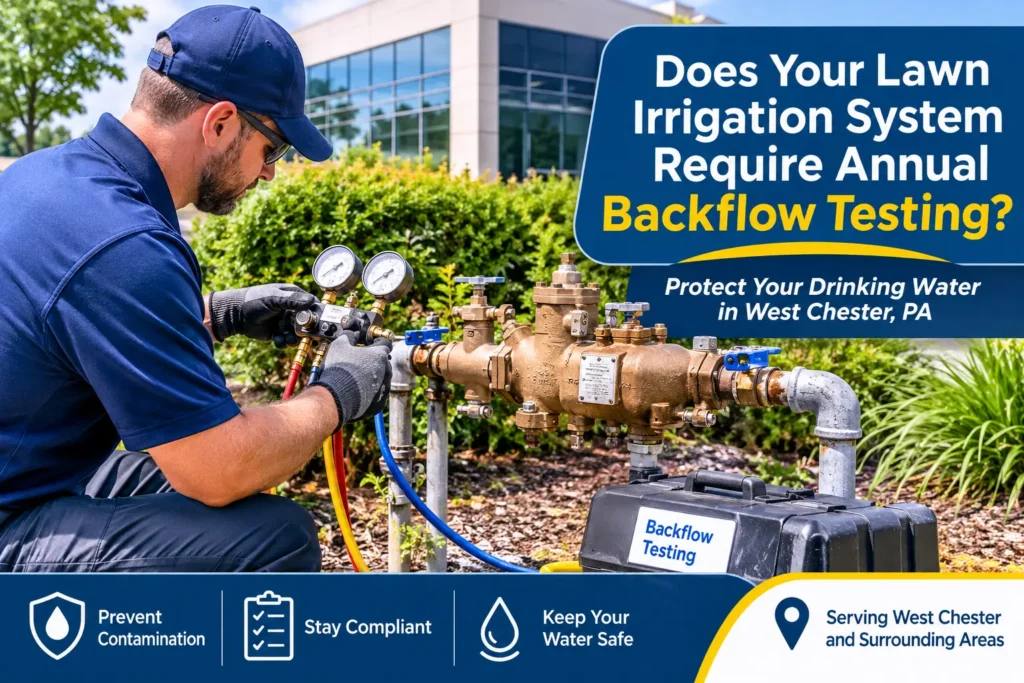
A professional backflow test evaluates whether a testable prevention assembly is operating correctly.
The general process includes:
1. Identifying the Backflow Assembly
The technician identifies the installed device and determines the appropriate testing procedure.
2. Inspecting the Device
The assembly is checked for visible damage, corrosion, leaks, and other potential problems.
3. Connecting Testing Equipment
Appropriate calibrated testing equipment is connected to the assembly’s test ports.
4. Measuring Device Performance
The technician evaluates the assembly according to the applicable testing procedure and manufacturer specifications.
5. Recording Test Results
The test results are documented to determine whether the assembly passes or requires attention.
6. Recommending Repairs When Necessary
If the device fails, the technician can explain the problem and recommend appropriate repair or replacement options.
For homeowners and property managers, professional backflow testing services can help maintain the performance of applicable backflow prevention assemblies.
Backflow Prevention Considerations for Chester County Homeowners
Homeowners throughout Chester County use outdoor faucets for gardening, irrigation, cleaning, swimming pools, and many other household activities.
Properties in West Chester, Downingtown, Exton, Phoenixville, Malvern, Chesterbrook, and surrounding communities may have different plumbing arrangements and water service providers.
This means backflow prevention requirements should be evaluated according to the property’s specific circumstances.
Why Local Water Supplier Requirements Matter
Water suppliers may establish cross-connection control programs to protect public drinking water systems.
Depending on the water supplier and property conditions, these programs may involve:
- Identifying potential cross-connections.
- Installing approved backflow prevention assemblies.
- Maintaining appropriate protective devices.
- Arranging periodic testing of applicable assemblies.
- Submitting test reports and compliance documentation.
Pennsylvania’s drinking water regulations also address cross-connections and backflow protection.
Homeowners should understand that testing requirements are not automatically identical for every property or outdoor faucet.
For example, a standard hose bib vacuum breaker and a testable RPZ assembly have different purposes and testing considerations.
If you receive a backflow testing notice, review the instructions from your water supplier and arrange the required testing within the specified timeframe.
Why Professional Backflow Protection Matters for Your Home
Protecting your drinking water supply requires more than simply attaching a device to an outdoor faucet.
The right protection must match the plumbing application and potential backflow hazard.
Professional assistance can help homeowners:
- Identify existing backflow prevention devices.
- Determine whether additional protection is necessary.
- Select suitable devices for outdoor plumbing connections.
- Identify damaged or improperly installed assemblies.
- Arrange professional testing for applicable devices.
- Address failed test results through appropriate repairs.
- Maintain relevant testing and maintenance documentation.
Whether you need residential backflow testing, a new installation, or assistance with a damaged assembly, understanding the available services can help you make informed decisions.
Explore our professional backflow repair services if an existing testable assembly is damaged or fails its performance test.
Protect Your Home’s Water Supply With Professional Backflow Services
Your outdoor faucet may seem like a simple plumbing fixture, but its connection to a garden hose or other equipment can create potential backflow risks.
From submerged garden hoses to chemical sprayers and irrigation connections, everyday household activities can introduce unwanted cross-connections.
Taking appropriate precautions, checking your outdoor plumbing, and using suitable backflow prevention devices can help protect your home’s drinking water supply.
At Professional Backflow Solutions, we provide residential and commercial backflow testing, installation, inspection, and repair services in West Chester, PA, and surrounding communities.
If you are unsure whether your outdoor faucet has appropriate backflow protection or need assistance with a testable backflow assembly, our team can help you understand your options.
Visit Professional Backflow Solutions to learn more about our services and keep your property’s water protection needs on track.
Frequently Asked Questions About Outdoor Faucet Backflow Prevention
1. Can an outdoor faucet cause backflow into my home’s drinking water?
Yes. An outdoor faucet connected to a garden hose can create a potential cross-connection. If water pressure drops or another pressure source forces water backward, contaminated water could enter the household plumbing system if adequate protection is not present.
2. Do outdoor faucets need backflow preventers in Pennsylvania?
Outdoor faucets connected to garden hoses can require backflow protection under applicable plumbing requirements. The appropriate device depends on the faucet design, plumbing arrangement, potential hazard, and applicable local requirements. Homeowners should verify whether their faucet has suitable built-in or separate protection.
3. What is a hose bib vacuum breaker?
A hose bib vacuum breaker is a small backflow prevention device installed on an outdoor faucet or hose connection. It helps prevent contaminated water from being siphoned backward into the potable water supply when water pressure drops.
4. How do I know if my outdoor faucet has backflow protection?
Look for a visible vacuum breaker attached to the faucet outlet or hose connection. Some outdoor faucets also have integral backflow protection. If you cannot identify the device, consult a qualified plumbing professional to evaluate the installation.
5. Can a garden hose contaminate household drinking water?
Yes, under certain conditions. If a garden hose is submerged in dirty water, fertilizer solutions, cleaning chemicals, or other contaminated liquids, back-siphonage could pull those substances into the plumbing system if adequate backflow protection is absent.
6. Is a hose bib vacuum breaker the same as an RPZ backflow preventer?
No. A hose bib vacuum breaker is a relatively simple device designed primarily to protect against back-siphonage at a hose connection. An RPZ assembly provides a higher level of protection and is used for applications involving more significant backflow hazards. They are not interchangeable in every application.
7. Does an outdoor faucet backflow preventer need regular maintenance?
Yes. Outdoor backflow prevention devices should be visually checked for leaks, corrosion, physical damage, and deterioration. Follow manufacturer maintenance instructions and applicable local requirements. Testable assemblies may require periodic professional performance testing.
8. Can I install a hose bib vacuum breaker myself?
Some screw-on hose connection vacuum breakers are designed for straightforward installation. However, the device must be suitable for the application and meet applicable requirements. More complex plumbing connections and regulated backflow assemblies should be handled by qualified professionals.
9. Does backflow testing include outdoor faucets?
Not necessarily. Backflow testing generally refers to performance testing of a testable backflow prevention assembly. A simple hose bib vacuum breaker may not require the same testing procedure. Your water supplier’s requirements and the type of installed device determine what testing is necessary.
10. Who provides residential backflow testing in West Chester, PA?
Professional Backflow Solutions provides residential and commercial backflow testing, inspection, installation, and repair services in West Chester, PA, and surrounding service areas. Homeowners can contact the company to discuss their backflow prevention and testing needs.
Protect your home’s water supply with proper backflow prevention. Contact Professional Backflow Solutions for professional backflow testing, installation, inspection, and repair services in West Chester and surrounding Chester County communities.