A clean and reliable water supply is important for every home and business. However, plumbing connections can sometimes allow contaminated water to flow backward into a property’s drinking water system. This is why backflow prevention devices play an important role in protecting water quality.
One common question property owners ask is: How often does a backflow preventer need testing in West Chester, PA?
Many testable backflow prevention assemblies require annual testing, but the exact schedule depends on the device, its application, and the requirements of the local water supplier. Understanding these requirements can help homeowners, landlords, and commercial property managers avoid missed deadlines and keep their water protection systems working properly.
Whether you own a home, manage an apartment complex, or operate a commercial property in West Chester or nearby communities, knowing when to schedule backflow testing is an important part of responsible property maintenance.
How Often Should a Backflow Preventer Be Tested?
Most testable backflow prevention assemblies should be tested at least once a year when required by the applicable water supplier’s cross-connection control program. Annual testing helps confirm that the device’s internal components are operating correctly and can prevent contaminated water from flowing into the potable water supply.
However, not every backflow prevention device follows the same testing schedule. Some residential devices, such as certain dual-check valves, are not designed for field testing and may follow different inspection or replacement requirements.
The testing schedule can depend on several factors:
- The type of backflow prevention device installed.
- The property’s plumbing configuration and potential contamination risks.
- The applicable water supplier’s cross-connection control requirements.
- Local ordinances and installation requirements.
- Whether the device has recently been installed, repaired, or relocated.
For property owners in West Chester, it is important to review any testing notification received from the water supplier. If you are unsure about your device or its testing deadline, contact the water supplier or a qualified backflow professional for guidance.
Remember: Annual testing is common for testable assemblies, but property owners should confirm the specific requirements that apply to their property.
What Determines the Backflow Testing Schedule in West Chester, PA?
Backflow testing frequency is not always identical for every property. The type of assembly, its purpose, and the potential risks associated with the plumbing system can influence the testing requirements.
1. Type of Backflow Prevention Device
Different backflow preventers are designed to protect water supplies against different types of contamination risks. Some common assemblies include:
Reduced Pressure Zone (RPZ) Assembly
An RPZ assembly provides protection against both backpressure and backsiphonage. It is commonly used in applications involving higher contamination risks. Its internal components and relief valve must operate properly to provide the intended protection.
Double Check Valve Assembly (DCVA)
A DCVA uses two independently operating check valves to help prevent contaminated water from flowing backward. These assemblies are commonly used in certain low- or medium-hazard applications, depending on the water supplier’s requirements.
Pressure Vacuum Breaker (PVB)
A PVB helps prevent backsiphonage and is frequently used with irrigation and sprinkler systems. It must be installed in an appropriate location and maintained according to applicable requirements.
Residential Dual Check Valve
Some residential properties have dual-check devices installed near the water meter. Unlike many testable assemblies, these devices are generally not field-testable using the same procedures as RPZ or DCVA assemblies. Their inspection and replacement requirements depend on the applicable program.
Understanding which device is installed on your property is the first step toward determining the correct maintenance and testing schedule.
2. Local Water Supplier Requirements
Water suppliers establish cross-connection control programs to protect their public water distribution systems. These programs may include:
- Initial device inspections and testing.
- Annual testing requirements for applicable assemblies.
- Test report submission deadlines.
- Requirements for qualified or approved testers.
- Additional testing after repairs or installation.
West Chester and surrounding communities can have different water service arrangements. Therefore, property owners should not assume that a testing deadline or reporting procedure used by another municipality automatically applies to their property.
Always check the instructions provided by your specific water supplier.
3. Property Type and Potential Contamination Risk
The type of property and the activities taking place inside it can also affect backflow protection requirements.
For example, a home with an irrigation system may have different protection needs than a restaurant, industrial facility, or commercial building.
Properties with multiple plumbing connections, chemical handling equipment, fire protection systems, or other potential cross-connections may require additional attention under the applicable cross-connection control program.
Pennsylvania Backflow Testing Requirements: What Property Owners Should Know
Pennsylvania has regulations designed to protect public drinking water systems from contamination caused by uncontrolled cross-connections.
One important regulation is 25 Pa. Code §109.709, Cross-Connection Control Program.
Under this regulation, customers are responsible for eliminating cross-connections or providing acceptable backflow prevention devices to protect the public water distribution system against contamination from backpressure and backsiphonage.
The regulation also requires public water suppliers, when directed by the Pennsylvania Department of Environmental Protection (PA DEP), to develop and implement comprehensive cross-connection control programs.
Does Pennsylvania Require Annual Backflow Testing?
Annual testing is a common requirement for testable backflow prevention assemblies under local cross-connection control programs. Pennsylvania DEP training guidance also identifies annual testing as typical.
However, it is important to understand the difference between state regulations and individual water supplier requirements.
Pennsylvania’s cross-connection control regulation does not establish one universal annual testing interval for every device and property. Specific testing schedules, approved devices, reporting procedures, and additional requirements are determined through the applicable program and local rules.
For example, Pennsylvania American Water has a cross-connection control program that requires applicable backflow preventers to be tested annually.
If you own a property in West Chester, Downingtown, Exton, Phoenixville, Malvern, or another nearby community, check which water supplier serves your property and follow its specific instructions.
You can review the Pennsylvania cross-connection control regulation and the Pennsylvania DEP backflow testing and maintenance guidance for additional information.
Do Residential and Commercial Properties Need Backflow Testing at the Same Frequency?
Residential and commercial properties can have different backflow protection requirements. The testing schedule depends on the devices installed and the potential hazards associated with each property’s water connections.
Residential Backflow Testing
Homeowners may have backflow prevention devices connected to:
- Lawn irrigation and sprinkler systems.
- Outdoor plumbing connections.
- Residential fire protection systems.
- Other plumbing installations that create potential cross-connections.
For example, an irrigation system can create a connection between potable water and outdoor water that may contain fertilizers, soil, or other contaminants.
A properly selected and maintained backflow prevention assembly helps protect the drinking water supply from these potential risks.
If your home has a testable RPZ or PVB assembly, check whether annual testing is required by your water supplier. If your property has a residential dual-check device, ask about its applicable inspection or replacement schedule.
Commercial Backflow Testing
Commercial properties may have more complex plumbing systems and multiple potential cross-connections.
Common examples include:
- Restaurants and commercial kitchens.
- Apartment buildings and residential complexes.
- Office buildings and retail stores.
- Warehouses and industrial facilities.
- Commercial irrigation systems.
- Fire sprinkler and fire protection systems.
Depending on the property’s use and hazard classification, different types of backflow prevention assemblies may be required.
Business owners and facility managers should maintain a record of installed devices, testing dates, repair history, and submitted test reports.
Professional commercial backflow services can help property owners address testing, inspection, installation, and repair needs for applicable systems.
When Should You Schedule Backflow Testing Outside Your Regular Annual Schedule?
Although annual testing is common for applicable assemblies, certain situations may require additional testing or inspection.
After Backflow Preventer Installation
A newly installed testable backflow prevention assembly may need an initial performance test before being placed into service. This helps confirm that the device is operating correctly and meets applicable installation and water supplier requirements.
After Repairs or Component Replacement
If a backflow preventer has undergone repairs, its performance should be checked again according to the applicable requirements. Replacing internal components does not automatically mean that the entire assembly is functioning correctly.
A qualified tester can evaluate the device and determine whether it passes the required performance test.
After Plumbing Modifications
Changes to a property’s plumbing system can introduce new cross-connections or affect existing backflow protection.
For example, installing new irrigation equipment, modifying commercial plumbing, or connecting additional water-using equipment may require a review of the property’s backflow protection.
When Your Water Supplier Sends a Testing Notice
If you receive a backflow testing notice, pay attention to the stated deadline and instructions.
Even if your device was tested recently, the water supplier may require updated documentation or a test performed within a particular reporting period.
Do not ignore official testing notifications. Contact your water supplier or a qualified backflow professional if you need help understanding the requirements.
What Happens During a Professional Backflow Test?
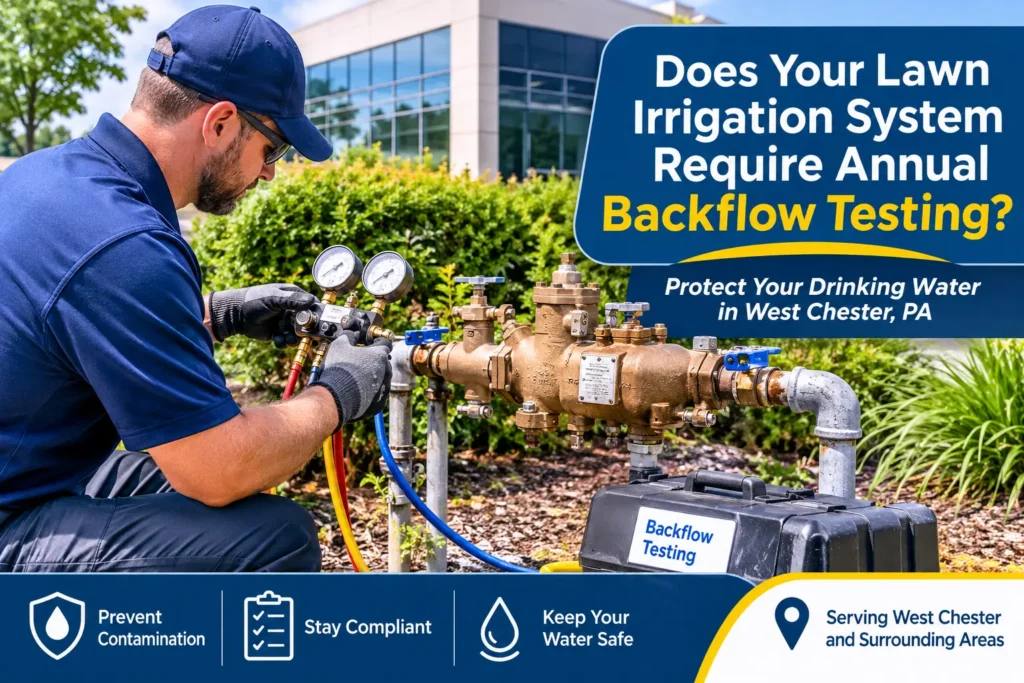
Professional backflow testing involves more than simply looking at the outside of a valve. A qualified tester uses specialized equipment to check whether the assembly is operating within its applicable performance standards.
Here is what property owners can generally expect.
1. Visual Inspection of the Backflow Assembly
The tester begins by examining the device and its surrounding plumbing connections.
This may include checking for:
- Visible leaks or water damage.
- Corrosion or physical deterioration.
- Damaged fittings and connections.
- Accessibility and general installation condition.
- Signs of previous repairs or improper modifications.
The inspection helps identify visible problems before the performance test begins.
2. Testing Internal Components and Pressure
The tester connects specialized differential pressure testing equipment to the appropriate test ports.
Depending on the device type, the procedure evaluates the performance of internal check valves, relief valves, and other protective components.
The purpose is to determine whether the assembly is functioning within the applicable testing standards.
3. Reviewing Test Results and Documentation
After testing, the tester records the results and determines whether the assembly passes or fails.
If the device passes, the completed test report can be submitted according to the water supplier’s procedures.
If it fails, the property owner may need repairs, replacement, and another performance test before the device can be considered compliant.
Professional backflow inspection services help identify device condition and potential problems that may require further attention.
What Happens If Your Backflow Preventer Fails Its Test?
A failed backflow test means that the assembly did not meet the applicable performance requirements during testing.
This does not always mean the device needs complete replacement. In many situations, a specific internal component may be worn, damaged, obstructed, or unable to function correctly.
Some common reasons for a failed backflow test include:
- Worn or damaged rubber seals.
- Debris or sediment inside the assembly.
- Faulty check valves.
- Mineral buildup on internal components.
- Damaged relief valve components.
- Normal wear and deterioration over time.
The appropriate next step is to have the assembly evaluated by a qualified professional.
Depending on the condition of the device, the solution may involve cleaning, component replacement, adjustment, repair, or complete assembly replacement.
After the work is completed, the assembly should be retested when required to verify that it meets the applicable performance standards.
If your device has failed its latest test, explore professional backflow repair services to understand the available repair options.
Ignoring a failed test or delaying necessary repairs can leave the water protection system operating below its required performance level. Property owners should also follow their water supplier’s instructions regarding deadlines and any required corrective action.
Why Regular Backflow Testing Is Important for West Chester Property Owners
Regular testing is an important part of maintaining a reliable backflow prevention system. It helps property owners identify performance issues and confirm that their assemblies are providing the intended protection.
Some important benefits include:
Protecting Drinking Water: Properly functioning backflow prevention assemblies help prevent contaminated water from entering potable water systems through uncontrolled cross-connections.
Identifying Mechanical Problems: Testing can reveal worn seals, faulty valves, and other internal issues that may not be visible during a basic visual inspection.
Supporting Compliance: Completing required tests and submitting documentation on time helps property owners meet applicable water supplier requirements.
Reducing Unexpected Problems: Identifying device problems early can help property owners plan necessary maintenance and repairs before more serious issues develop.
Maintaining Property Records: Keeping testing and repair reports provides a useful record of the property’s backflow prevention history.
For homeowners and businesses in West Chester and surrounding Chester County communities, these steps can help maintain dependable water protection and avoid unnecessary compliance problems.
Schedule Professional Backflow Testing in West Chester, PA
Knowing when your backflow preventer needs testing is an important part of protecting your property’s water supply. However, understanding the device type, applicable testing schedule, and reporting requirements can sometimes be confusing.
Professional Backflow Solutions provides residential and commercial backflow services in West Chester, PA, and surrounding communities.
Our services include:
- Backflow testing.
- Backflow inspection.
- Backflow installation.
- Backflow repair.
- Backflow prevention solutions.
Whether you need routine testing, assistance after a failed test, or professional help with a backflow prevention assembly, our team can help you understand the next steps for your property.
Do not wait until a testing deadline becomes an urgent concern. Arrange the appropriate service and keep your backflow prevention system in good working condition.
Need professional backflow testing in West Chester, PA?
Schedule an appointment with Professional Backflow Solutions to discuss your residential or commercial backflow testing needs.
Frequently Asked Questions About Backflow Testing in West Chester, PA
1. How often does a backflow preventer need to be tested in Pennsylvania?
Many testable backflow prevention assemblies require annual testing under the applicable water supplier’s cross-connection control program. However, testing frequency depends on the device type, property application, and local requirements. Property owners should review their water supplier’s testing notice to confirm the correct schedule.
2. Is annual backflow testing required for every home in West Chester, PA?
No. Not every home has the same type of backflow prevention device or testing obligation. Some residential properties have non-testable dual-check devices that follow different inspection or replacement schedules. Homeowners should verify the requirements for their specific device with their water supplier.
3. What happens if I do not get my backflow preventer tested on time?
Missing a required testing deadline can result in a noncompliance notice and additional action from the water supplier. Depending on the applicable program, continued noncompliance may lead to water service interruption after reasonable notice. Property owners should address testing notices promptly.
4. Does a new backflow preventer need to be tested after installation?
Many testable backflow prevention assemblies require an initial performance test after installation. This helps confirm that the assembly is operating correctly. Property owners should follow the applicable water supplier’s installation, testing, and reporting procedures.
5. Do commercial buildings need backflow testing every year?
Many commercial properties with testable backflow assemblies are subject to annual testing requirements. Restaurants, apartment complexes, office buildings, and industrial facilities may have different device requirements based on their water connections and hazard classifications.
6. Who is qualified to perform a backflow preventer test?
Testing should be performed by a qualified backflow prevention assembly tester who meets the certification and approval requirements of the applicable water supplier. Property owners should confirm the tester’s credentials before scheduling an appointment.
7. Does a backflow preventer need testing after a repair?
A testable backflow assembly generally needs to be retested after repairs to confirm that its components are working properly. The applicable water supplier may also require updated test documentation following the repair.
8. How long does professional backflow testing take?
Testing time depends on the device type, its accessibility, the number of assemblies, and their condition. A straightforward test may take less time than a system requiring troubleshooting or repairs. Ask your tester for an estimate based on your property.
9. Can a backflow preventer fail an annual test?
Yes. A backflow preventer can fail because of worn seals, damaged check valves, debris, mineral buildup, or other mechanical problems. A qualified tester can identify the issue and recommend appropriate repairs or replacement.
10. Where can I schedule backflow testing near West Chester, PA?
Property owners in West Chester and surrounding Chester County communities can contact Professional Backflow Solutions for residential and commercial backflow testing, inspections, installation, and repair assistance.