Commercial properties depend on clean, reliable water for daily operations. Restaurants use water for food preparation, office buildings rely on it for employees and visitors, and industrial facilities often connect water systems to specialized equipment. However, these connections can create risks if contaminated water flows backward into the drinking water supply.
This is where commercial backflow testing becomes important.
For business owners and property managers in West Chester and throughout Chester County, understanding backflow testing requirements helps protect water quality, maintain plumbing safety, and meet applicable water supplier regulations. Regular testing also helps identify problems with backflow prevention devices before they become more serious.
Whether you manage a restaurant, warehouse, apartment complex, retail building, or office property, knowing how backflow prevention works can help you make informed decisions about your commercial plumbing system.
In this guide, we explain Pennsylvania backflow requirements, commercial testing schedules, different types of backflow preventers, testing procedures, and what to do if a device fails its test.
Why Commercial Properties Need Backflow Testing
Commercial plumbing systems are often more complicated than residential systems. They may contain multiple water connections, specialized equipment, irrigation systems, boilers, and other installations that create potential cross-connection risks.
A cross-connection occurs when a drinking water supply comes into contact with a source of water or another substance that is not safe for consumption. If water pressure changes, contaminated water may flow backward through the plumbing system.
This process is known as backflow.
Without proper protection, substances such as cleaning chemicals, fertilizers, industrial liquids, and other contaminants could enter potable water lines.
Understanding Backflow in Commercial Plumbing Systems
There are two common conditions that can cause backflow:
Backsiphonage: This happens when pressure in the public water supply drops below the pressure inside a connected plumbing system. A water main break, nearby firefighting activity, or another pressure disturbance can create conditions that allow water to flow backward.
Backpressure: This occurs when pressure inside a connected system becomes greater than the pressure in the incoming water supply. For example, certain boiler systems, pumps, and industrial equipment may create higher downstream pressure.
Both situations can create contamination risks when plumbing connections are not properly protected.
Common Commercial Activities That Create Cross-Connection Risks
Different commercial operations can introduce different backflow hazards.
Some common examples include:
- Restaurants with beverage dispensers, commercial kitchens, and chemical cleaning equipment.
- Office buildings with heating, cooling, and boiler systems.
- Warehouses with industrial water connections.
- Apartment complexes with shared plumbing and irrigation systems.
- Commercial properties with lawn sprinkler installations.
- Facilities with fire sprinkler and suppression systems.
- Manufacturing businesses that use water in production processes.
The level of protection needed depends on the potential hazard and the configuration of the plumbing system.
How Backflow Prevention Protects Commercial Water Supplies
Backflow prevention assemblies are designed to stop water from flowing in the wrong direction.
These devices provide an important barrier between potable water and potential contamination sources. However, simply having a backflow preventer installed does not mean it will continue working properly forever.
Internal components can wear out, valves can become damaged, and debris can affect performance.
Professional backflow testing evaluates whether a testable assembly is operating according to the applicable testing standards and requirements.
Pennsylvania Backflow Testing Requirements for Commercial Properties
Commercial property owners in Pennsylvania should understand the state’s cross-connection control regulations and the requirements established by their individual water suppliers.
One important regulation is 25 Pa. Code §109.709, which addresses cross-connection control programs.
Under this regulation, customers are responsible for eliminating cross-connections or providing acceptable backflow prevention devices to protect public water distribution systems against backsiphonage and backpressure.
The regulation also explains that a water supplier may discontinue service after reasonable notice if a customer does not meet the applicable requirements.
What Does Pennsylvania Code Say About Backflow Prevention?
Pennsylvania’s drinking water regulations establish an important framework for protecting public water supplies.
Under Section 109.709:
- Customers must eliminate unprotected cross-connections or provide acceptable backflow protection.
- Backflow prevention devices must be acceptable to the public water supplier.
- Public water suppliers may establish cross-connection control programs.
- These programs can include inspections of nonresidential properties and appropriate recordkeeping.
- Water service may be discontinued after reasonable notice when applicable requirements are not met.
For commercial property owners, this means backflow prevention should be treated as an ongoing responsibility rather than a one-time plumbing installation.
It is also important to understand that Pennsylvania’s statewide regulation does not establish one universal annual testing schedule for every commercial property. Specific testing frequencies and procedures can depend on the water supplier’s program, local requirements, and the type of device installed.
Are Commercial Backflow Devices Required to Be Tested Annually?
Many water suppliers require annual testing of applicable testable backflow prevention assemblies.
For example, Pennsylvania American Water operates a cross-connection control program that requires annual testing and reporting for applicable testable devices. Its program also distinguishes certain residential dual-check devices from other testable assemblies.
Other water suppliers may have different procedures for testing, inspections, reporting, and compliance.
Commercial property owners in West Chester, Downingtown, Exton, Phoenixville, and surrounding communities should check which water supplier serves their property before assuming that another municipality’s testing rules apply.
Additional testing may also be necessary following:
- Installation of a new backflow prevention assembly.
- Repairs or replacement of an existing device.
- Relocation of an assembly.
- A request from the water supplier.
- Suspected device failure or changes in system conditions.
Always confirm the applicable testing schedule with your water supplier.
Do Local Water Authorities Have Different Requirements?
Yes. Water suppliers may establish their own cross-connection control procedures within the applicable regulatory framework.
Depending on the service territory, requirements may address:
- Approved backflow prevention assemblies.
- Testing frequency and deadlines.
- Qualifications accepted for backflow testers.
- Inspection procedures.
- Test report submission.
- Corrective action following a failed test.
- Maintenance and compliance records.
For example, BCWSA provides specific instructions for its cross-connection compliance program, including test documentation procedures.
A business in one service territory may therefore have different reporting instructions from a business in another part of Chester County.
If you receive a backflow testing notice, read it carefully and follow the instructions provided by the responsible water supplier.
Which Commercial Properties Need Backflow Testing?
Backflow prevention requirements are not limited to one type of commercial building. Different business activities can introduce potential cross-connections that need to be evaluated.
Here are some common commercial property types where backflow protection may be necessary.
Restaurants and Food Service Businesses
Restaurants use water for food preparation, dishwashing, beverage dispensing, and cleaning.
Some connections may involve equipment or substances that create cross-connection risks, including:
- Beverage dispensing and carbonator systems.
- Commercial dishwashing equipment.
- Chemical cleaning dispensers.
- Kitchen equipment connections.
- Irrigation systems surrounding the property.
Appropriate backflow protection helps prevent unsafe substances from entering drinking water lines.
Office Buildings and Retail Properties
Office buildings and retail facilities may have several plumbing systems operating throughout the property.
Potential cross-connection areas include:
- Heating and cooling equipment.
- Boiler connections.
- Lawn irrigation systems.
- Janitorial equipment.
- Shared plumbing connections.
Property managers should understand which backflow assemblies serve different parts of their buildings and maintain applicable testing records.
Apartment Complexes and Multi-Unit Buildings
Multi-unit residential properties often have shared water infrastructure, irrigation systems, and additional plumbing connections.
A property may have multiple backflow prevention assemblies serving different systems.
Keeping an organized device inventory helps property managers track testing schedules and identify assemblies that need attention.
Industrial and Warehouse Facilities
Industrial buildings can have more complex plumbing arrangements because water may connect to manufacturing equipment, processing systems, chemical handling areas, and other specialized installations.
These environments may involve higher contamination risks depending on the materials and processes involved.
A proper cross-connection evaluation helps determine the appropriate backflow prevention method.
Healthcare and Specialized Facilities
Healthcare facilities, laboratories, and other specialized buildings may have unique plumbing configurations.
Their water systems should be evaluated according to their actual cross-connection hazards, applicable codes, and water supplier requirements.
The important point is that a building’s business category alone does not determine which backflow device it needs. The actual plumbing connections and potential hazards must be considered.
Types of Backflow Prevention Devices Used in Commercial Buildings
Different backflow prevention assemblies are designed to protect against different levels and types of contamination risks.
Three commonly discussed devices are the Reduced Pressure Zone Assembly, Double Check Valve Assembly, and Pressure Vacuum Breaker.
Reduced Pressure Zone Assembly (RPZ)
An RPZ assembly provides a high level of backflow protection for applications where the required hazard classification calls for this type of device.
It contains two check valves and a relief valve designed to help prevent contaminated water from flowing back into the potable water supply.
RPZ assemblies may be used in commercial and industrial applications where a higher degree of protection is necessary.
Because they contain moving internal components, these assemblies need appropriate testing and maintenance.
Double Check Valve Assembly (DCVA)
A Double Check Valve Assembly uses two independently operating check valves to help prevent reverse water flow.
It may be suitable for certain low-hazard or non-health-hazard applications, depending on applicable requirements.
DCVA assemblies are commonly found in some commercial plumbing and fire protection applications.
Pressure Vacuum Breaker (PVB)
A Pressure Vacuum Breaker is designed to protect against backsiphonage.
It is commonly associated with irrigation systems and other applications where the device’s installation conditions are appropriate.
PVB assemblies must be installed in accordance with their design requirements and applicable codes.
Which Backflow Preventer Does Your Commercial Property Need?
Choosing a backflow prevention device should not be based only on the type of business operating inside a building.
The correct assembly depends on several factors:
- The degree of potential contamination.
- The type of cross-connection.
- Whether backpressure or backsiphonage is possible.
- The plumbing configuration.
- Applicable plumbing codes.
- Water supplier approval requirements.
For a more detailed explanation, read our guide to RPZ vs. DCVA vs. PVB backflow preventers.
A qualified professional can help evaluate the system and determine which type of protection is appropriate.
How Often Should Commercial Backflow Preventers Be Tested?
Testing frequency is an important part of commercial backflow compliance.
Many water suppliers require annual testing of applicable testable assemblies. However, the exact schedule should always be confirmed with the authority responsible for the property’s water service.
Annual Backflow Testing Schedules
Annual testing helps identify mechanical problems before they create more serious water protection concerns.
Commercial property owners should:
- Review testing notices from their water supplier.
- Identify every testable backflow assembly on the property.
- Keep track of testing deadlines.
- Arrange testing before the applicable due date.
- Maintain copies of completed test reports.
- Follow any additional instructions from the water supplier.
Waiting until a compliance notice arrives can create unnecessary pressure for business owners and property managers.
When Additional Backflow Testing May Be Necessary
Some situations require testing outside the normal schedule.
For example, a newly installed assembly may need testing before being placed into service. A device that has undergone repairs or replacement may also need to be tested to confirm proper operation.
Testing may also be requested when a water supplier identifies a potential problem or when a device’s performance is in question.
How Commercial Property Managers Can Stay on Schedule
Managing several commercial properties can make it difficult to keep track of individual testing deadlines.
A simple maintenance record can help.
Keep a list of:
- Property addresses.
- Backflow assembly locations.
- Device types and serial numbers.
- Previous testing dates.
- Upcoming due dates.
- Repair and replacement history.
- Copies of submitted test reports.
Organized records make it easier to coordinate commercial backflow testing and respond to water supplier requests.
What Happens During a Commercial Backflow Test?
A professional backflow test evaluates whether a testable backflow prevention assembly is operating correctly.
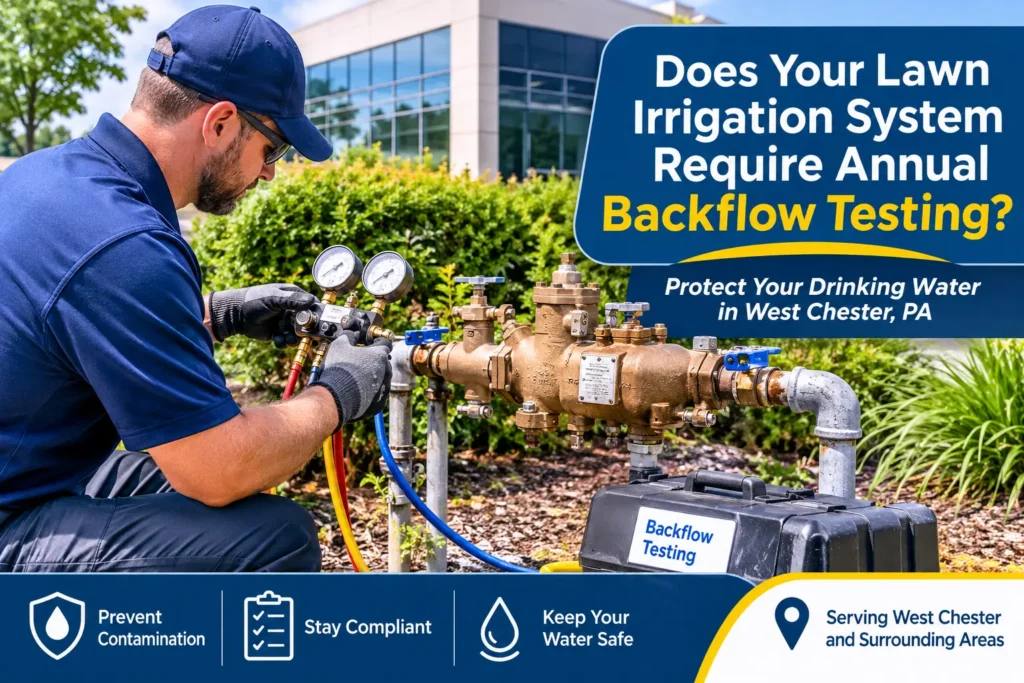
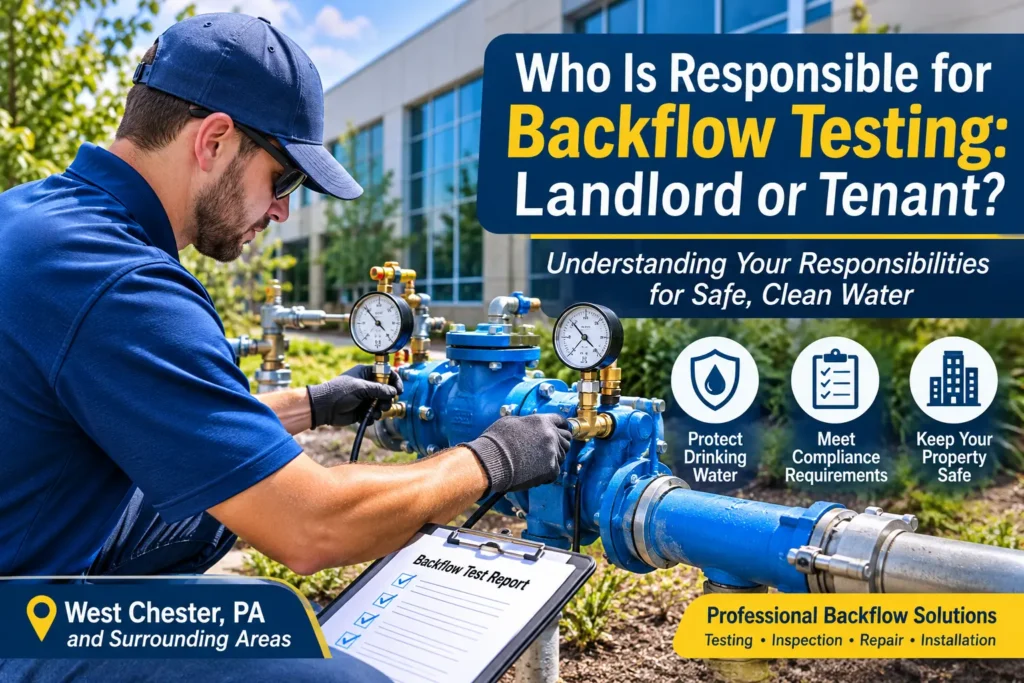
The technician uses specialized differential pressure testing equipment and follows the appropriate procedure for the assembly being tested.
Here is what a typical appointment may involve.
Step 1: Identify and Inspect the Backflow Assembly
The technician locates the assembly and checks its identification, accessibility, and visible condition.
They may look for signs of leakage, corrosion, physical damage, or other problems that could affect testing.
Step 2: Connect Professional Testing Equipment
Appropriate testing equipment is connected to the assembly’s designated test connections.
The equipment measures pressure differences within the device to evaluate its internal components.
Step 3: Evaluate Internal Valve Performance
The technician performs the required testing sequence for the specific assembly.
This helps determine whether the check valves and other relevant components are functioning within the applicable performance criteria.
Step 4: Record the Test Results
The results are documented in a backflow test report.
The report generally identifies the device, testing date, readings, and whether the assembly passed or failed.
Step 5: Submit the Required Test Documentation
The completed report must be handled according to the applicable water supplier’s procedures.
Some authorities require direct submission by the tester, while others use online reporting systems or designated administrators.
Businesses should confirm how their particular water supplier handles test documentation.
To learn more about the service, visit our page about professional backflow testing services.
What Happens If a Commercial Backflow Preventer Fails Its Test?
A failed backflow test does not automatically mean the entire plumbing system needs replacement.
Many devices can experience mechanical problems that may be corrected through appropriate repairs.
However, a failed test should never be ignored.
Common Reasons Commercial Backflow Devices Fail
Some common causes include:
- Worn or damaged internal check valves.
- Debris trapped inside the assembly.
- Mineral deposits and sediment buildup.
- Deteriorated rubber components.
- Damaged relief valve components.
- Pressure-related performance problems.
- Lack of routine maintenance.
Commercial plumbing systems can experience wear over time, especially when assemblies are exposed to demanding operating conditions.
Can a Failed Backflow Preventer Be Repaired?
In many situations, a failed assembly can be repaired if the problem involves serviceable internal components.
Depending on the device’s condition, repairs may involve cleaning, replacing damaged components, or correcting mechanical issues.
However, a severely damaged or unsuitable assembly may require replacement.
A proper evaluation helps determine the most appropriate solution.
Businesses experiencing a failed test can explore our commercial backflow repair services for additional information.
Why Retesting Is Important After Repairs
Completing a repair does not automatically prove that the backflow preventer is functioning correctly.
The assembly should undergo the required post-repair testing to verify its performance.
Updated documentation should then be handled according to the water supplier’s instructions.
What Should Businesses Do After Receiving a Failed Test Report?
If a commercial backflow device fails its test, property owners should:
- Review the test report and understand the identified problem.
- Contact a qualified backflow professional.
- Arrange the necessary repair or replacement.
- Complete the required post-repair testing.
- Submit updated documentation as instructed by the water supplier.
- Follow any additional corrective-action requirements.
Taking action promptly helps businesses address potential water protection problems and avoid unnecessary compliance delays.
Commercial Backflow Testing Documentation and Compliance Records
Proper documentation is an important part of commercial backflow management.
A successful test is useful, but businesses should also maintain the records needed to demonstrate that applicable testing and maintenance requirements have been addressed.
What Information Should a Backflow Test Report Include?
A typical report may contain:
- Commercial property name and address.
- Backflow assembly location.
- Manufacturer and model.
- Device serial number.
- Assembly type.
- Testing date.
- Test readings and results.
- Tester identification and required credentials.
- Repair information, when applicable.
The exact information required may differ depending on the water supplier’s reporting process.
Where Should Commercial Backflow Test Reports Be Submitted?
The correct submission location depends on the water supplier serving the property.
Some water suppliers use third-party compliance administrators or online reporting platforms.
For example, Pennsylvania American Water uses BSI Online for applicable testable device reporting.
BCWSA also publishes specific instructions for its own cross-connection compliance program.
Businesses should read their testing notices and confirm whether the technician or property owner is responsible for submitting the completed documentation.
How Long Should Businesses Keep Backflow Testing Records?
Property owners and facility managers should maintain an organized history of test reports, repairs, installations, and replacements.
Record retention requirements can vary, so businesses should follow their water supplier’s instructions and applicable local requirements.
Keeping records accessible also makes future inspections and maintenance planning easier.
What Are the Consequences of Ignoring Commercial Backflow Testing Requirements?
Ignoring backflow prevention responsibilities can create risks for both the property and the surrounding water supply.
Potential consequences include:
Water contamination risks: An unprotected cross-connection can allow potentially harmful substances to enter potable water systems.
Compliance notices: Water suppliers may issue notices when required protection, testing, or corrective actions are not completed.
Required repairs and inspections: Businesses may need to arrange additional work to bring their systems into compliance.
Water service interruption: Under Pennsylvania Code §109.709, a water supplier may discontinue service after reasonable notice when a customer fails to meet applicable cross-connection protection requirements.
Business disruption: Delayed maintenance or unresolved testing issues can interfere with normal commercial operations.
Proactive backflow testing helps businesses identify problems, maintain appropriate protection, and address requirements before they become more disruptive.
How to Prepare Your Commercial Property for Backflow Testing
Preparing your property before a testing appointment can help make the process more organized and efficient.
Here are some practical steps for business owners and property managers.
Locate all backflow prevention assemblies. Identify devices serving domestic water, irrigation, fire protection, and other systems.
Provide clear access. Make sure technicians can reach the assemblies and their test connections.
Gather previous test reports. Previous records can help identify device history and recurring problems.
Coordinate with facility staff. Inform employees or maintenance personnel about the scheduled appointment.
Discuss possible water interruptions. Some testing procedures require temporary isolation of the connected system. Plan accordingly to minimize operational disruption.
Confirm reporting requirements. Know which water supplier or compliance administrator needs to receive the completed test documentation.
These simple preparations can help property managers coordinate testing without unnecessary delays.
Professional Commercial Backflow Testing in West Chester and Chester County, PA
Commercial backflow prevention requires more than simply installing a device and forgetting about it. Assemblies need appropriate testing, maintenance, and corrective action when problems are identified.
Professional Backflow Solutions provides backflow testing, inspection, installation, and repair services for residential and commercial properties.
Our goal is to help property owners understand their backflow systems, identify potential problems, and maintain reliable water protection.
Reliable Backflow Testing for Commercial Properties
Whether you manage a restaurant, office building, warehouse, apartment complex, or another commercial facility, understanding your property’s backflow prevention requirements is important.
Professional testing helps evaluate the condition and performance of applicable backflow assemblies and provides documentation of the test results.
Backflow Repair and Installation Solutions
If a backflow preventer needs attention, the appropriate solution may involve repair, replacement, or installation of a suitable assembly.
Professional Backflow Solutions also provides backflow inspection services and backflow installation services to help address different property requirements.
Serving West Chester and Surrounding Communities
Professional Backflow Solutions serves customers in West Chester and surrounding communities, including Downingtown, Exton, Phoenixville, Chesterbrook, Ardmore, and other areas within its service territory.
Whether your commercial property needs routine backflow testing or follow-up service after a failed test, arranging professional assistance can help you stay ahead of maintenance concerns.
Need commercial backflow testing in West Chester or Chester County, PA?
Contact Professional Backflow Solutions to discuss your property’s backflow testing needs and arrange an appointment.
Schedule a Backflow Service Appointment
Frequently Asked Questions About Commercial Backflow Testing
1. How often is commercial backflow testing required in Chester County, PA?
Commercial backflow testing frequency depends on the applicable water supplier’s cross-connection control program, local requirements, and device classification. Many water suppliers require annual testing of applicable testable assemblies. Property owners should confirm their exact testing schedule with their water supplier.
2. Is backflow testing mandatory for all commercial buildings in Pennsylvania?
Not every commercial building has identical backflow prevention requirements. Properties with identified cross-connection hazards may need approved backflow protection. The water supplier evaluates applicable requirements based on the property’s plumbing conditions and its cross-connection control program.
3. Who is responsible for scheduling commercial backflow testing?
The property owner or responsible water customer generally needs to ensure required backflow prevention devices are maintained and tested. Property managers may coordinate appointments, but responsibility should be confirmed through the applicable water supplier requirements and property agreements.
4. What types of commercial businesses need backflow prevention devices?
Restaurants, office buildings, industrial facilities, warehouses, apartment complexes, and retail properties may need backflow protection. The appropriate device depends on the potential contamination hazard and the property’s plumbing configuration.
5. What happens if a commercial backflow preventer fails its test?
A failed backflow preventer may require repair, adjustment, or replacement, followed by the required retesting. Property owners should review the test report, address the identified problem, and follow their water supplier’s corrective-action and documentation instructions.
6. Can a regular plumber perform commercial backflow testing?
Not necessarily. Backflow testing qualifications depend on the water supplier’s requirements and applicable standards. Commercial property owners should choose a tester with the required backflow testing credentials who is accepted by the responsible water authority.
7. Does a commercial backflow test require shutting off the building’s water?
Testing may require temporarily isolating the backflow assembly and interrupting water service to the connected system. The impact depends on the assembly and plumbing configuration. Businesses should coordinate with the technician to minimize disruption.
8. What information is included in a commercial backflow test report?
A typical commercial backflow test report includes property and device identification, assembly type, testing date, pressure readings, test results, and tester information. Additional details may be required by the applicable water supplier.
9. Are restaurants required to test their backflow prevention devices?
Restaurants may need backflow protection and periodic testing when their plumbing systems contain regulated cross-connections or identified hazards. Beverage equipment, chemical dispensers, kitchen connections, and other installations may create potential backflow risks.
10. Where can businesses schedule commercial backflow testing in West Chester, PA?
Businesses in West Chester and surrounding Chester County communities can contact Professional Backflow Solutions to discuss commercial backflow testing, inspections, repairs, and installation services. Property owners can arrange an appointment through the company’s website.