A backflow preventer is an important part of a property’s water protection system. It helps prevent water from flowing in the wrong direction and potentially carrying unwanted substances into the potable water supply.
Like other mechanical plumbing components, backflow prevention devices can develop leaks, corrosion, worn components, pressure problems, or other issues over time. However, not every plumbing problem means a backflow preventer has failed.
For West Chester, PA homeowners, knowing the common failing backflow preventer symptoms can help you recognize when a device may need professional inspection or testing.
In this guide, we’ll explain what a backflow preventer does, the warning signs to watch for, common causes of failure, and what to do if you suspect a problem.
What Is a Backflow Preventer?
A backflow preventer is a plumbing device designed to help stop water from reversing direction through a connected water system.
Normally, water flows from the supply toward the property’s plumbing fixtures and equipment. Under certain pressure conditions, however, water can potentially move backward. This is known as backflow.
Backflow can occur because of conditions such as:
- Changes in water pressure
- Backpressure
- Backsiphonage
- Cross-connections between potable and non-potable systems
- Plumbing or equipment malfunctions
A properly functioning backflow prevention assembly helps protect the potable water supply from potential contamination.
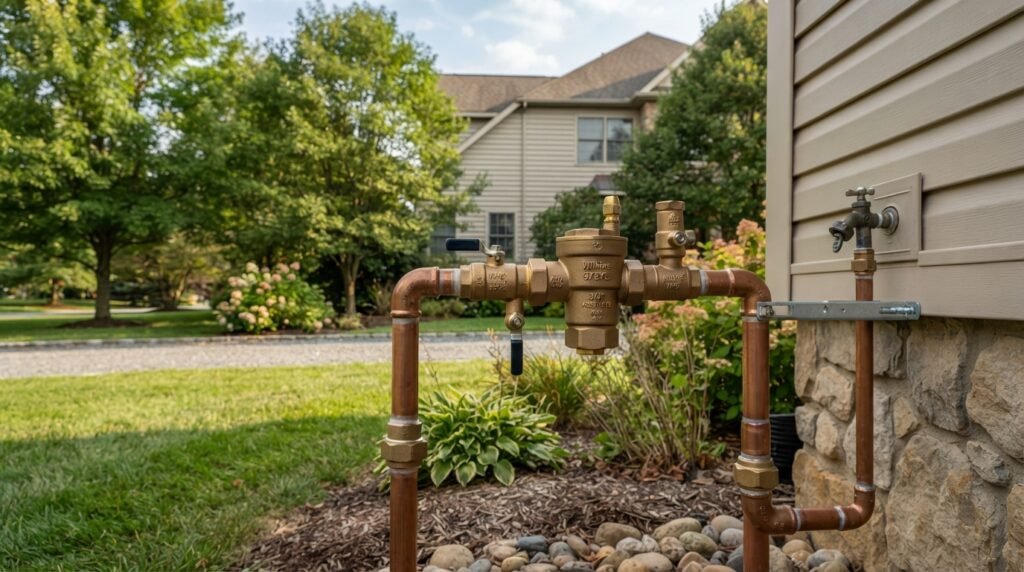
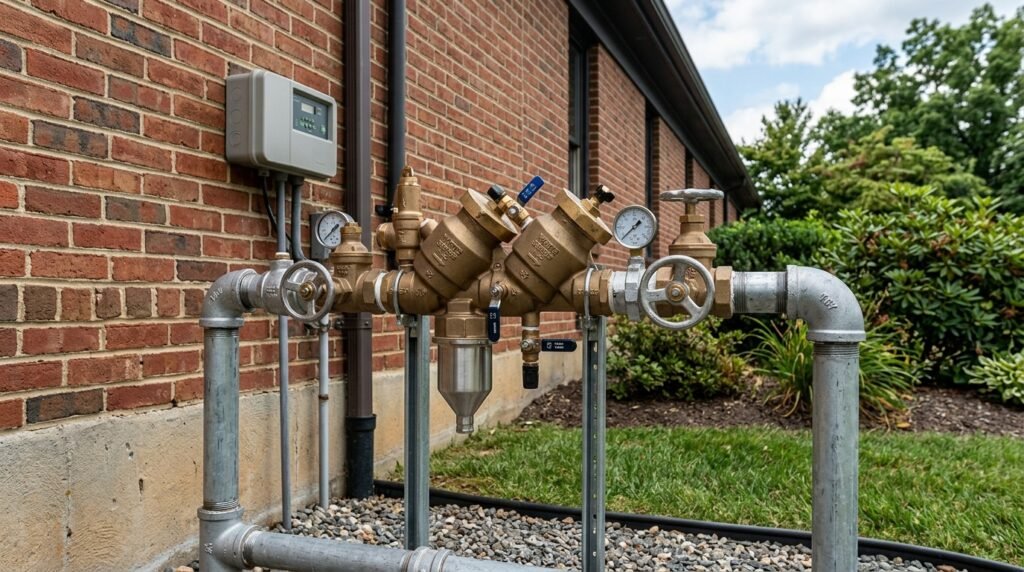
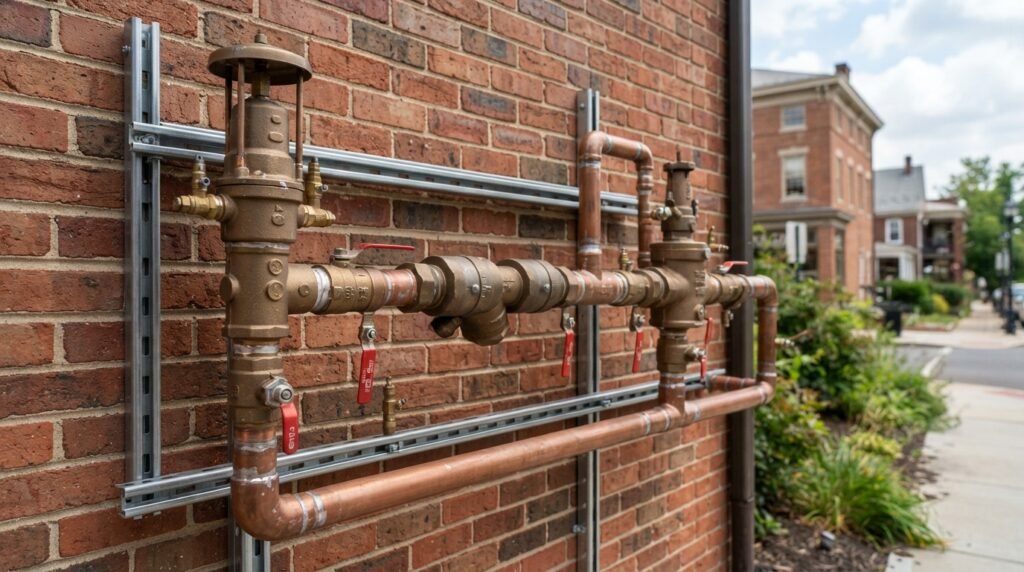
Homeowners may encounter different types of backflow prevention devices depending on the property and application, including Pressure Vacuum Breakers (PVB), Double Check Valve Assemblies (DCVA), and Reduced Pressure Zone (RPZ) assemblies.
Why Backflow Preventer Problems Should Not Be Ignored
A backflow device is intended to provide protection when water pressure or flow conditions change. If its components become damaged or stop operating correctly, the assembly may not provide the protection it was designed to provide.
This is one reason regular inspection and testing are important.
Professional Backflow Solutions explains that backflow testing evaluates whether a prevention assembly is operating correctly and can identify conditions that may require maintenance, repair, or replacement.
It is also important to understand that a visible symptom does not automatically confirm device failure. A leak, pressure change, or unusual noise can have several possible causes. Proper diagnosis is needed before deciding whether repair or replacement is necessary.
7 Warning Signs of a Failing Backflow Preventer
1. Water Is Leaking From the Backflow Preventer
One of the easiest problems to notice is visible water around the assembly.
You may see:
- Dripping near valves
- Water around fittings
- Persistent moisture
- Leakage from a component
- Water collecting underneath the device
A small amount of water should not automatically be assumed to mean the entire assembly has failed. The location, amount, and cause of the water matter.
A leaking valve, worn seal, damaged component, pressure condition, or another mechanical problem may be responsible.
If you notice persistent leakage, professional evaluation can determine whether the device needs maintenance or backflow repair.
2. The Device Is Continuously Discharging Water
Some backflow prevention assemblies can discharge water under certain operating conditions. However, continuous or unusual discharge deserves attention.
For example, a homeowner may notice water coming from an area around the relief valve or another part of the assembly.
Possible causes can include:
- Pressure changes
- Debris
- Worn internal components
- Valve problems
- Damaged seals
- Other mechanical conditions
The important point is not to assume the cause based only on what you see. A professional can inspect and test the assembly to determine what is happening.
3. Your Water Pressure Has Changed
A sudden change in water pressure can be another reason to investigate your plumbing system.
You may notice:
- Lower-than-usual water pressure
- Inconsistent pressure
- Changes when multiple fixtures operate
- Pressure changes associated with an irrigation system
However, low water pressure does not necessarily mean your backflow preventer is failing.
Other causes can include plumbing restrictions, valves, supply problems, fixtures, or issues elsewhere in the water system.
If pressure problems occur together with visible backflow device problems, an inspection can help determine whether the backflow assembly is involved.
For professional evaluation, see Backflow Inspection Services.
4. You Notice Corrosion or Physical Damage
Backflow preventers are exposed to the conditions around their installation location. Outdoor assemblies can be exposed to moisture, temperature changes, dirt, and other environmental factors.
Look for:
- Heavy corrosion
- Damaged fittings
- Cracked components
- Deteriorated valves
- Physical impact
- Loose or damaged connections
Surface discoloration does not always mean a device needs replacement. However, significant corrosion or physical damage should be evaluated because it can affect components and connections.
Pennsylvania winters can also be a concern for exposed plumbing equipment. Suspected freezing or physical damage should be checked before the device is returned to normal service.
5. The Backflow Preventer Fails a Test
A failed backflow test is one of the clearest reasons to investigate the condition of a prevention assembly.
Backflow testing uses appropriate equipment and measurements to evaluate whether the device is operating as intended. Professional Backflow Solutions states that a failed test can result in the need for cleaning, adjustment, repair, component replacement, or complete replacement depending on the condition of the assembly.
A failed test does not automatically mean that the entire device must be replaced.
The appropriate next step is to determine why the assembly failed.
If your device has failed testing, Backflow Testing Services can help identify performance problems and document the test results.
6. The Assembly Makes Unusual Sounds
Unusual sounds around a backflow preventer can be another reason to investigate.
You might hear:
- Hissing
- Chattering
- Vibrations
- Repeated clicking
- Unusual valve noises
A sound by itself does not prove that the backflow preventer has failed. Water pressure, flow conditions, valves, and other plumbing components can also produce unusual sounds.
If the noise is persistent or occurs together with leakage, pressure changes, or a failed test, professional inspection is appropriate.
7. The Device Shows Signs of Wear or Repeated Problems
A backflow preventer can experience mechanical wear over time.
Repeated problems may include:
- Multiple failed tests
- Recurring leaks
- Worn valves
- Deteriorated seals
- Corrosion
- Damaged internal components
- Repeated pressure-related issues
A device that repeatedly develops problems deserves a closer evaluation rather than repeated temporary fixes.
The goal is to determine whether the assembly remains suitable for the application and whether repair or replacement is appropriate.
What Causes a Backflow Preventer to Fail?
Understanding the causes of backflow device problems can help homeowners take a more proactive approach.
Normal Wear and Component Deterioration
Backflow prevention assemblies contain mechanical components that can wear over time.
Valves, seals, springs, check components, and other parts can eventually require maintenance or replacement.
Debris and Sediment
Dirt, debris, or other material entering a plumbing system can interfere with mechanical components.
When internal parts cannot operate as intended, testing may identify a performance problem.
Corrosion
Corrosion can affect valves, fittings, connections, and other components.
The severity and location of corrosion matter. Minor surface discoloration is different from substantial deterioration that affects the assembly’s condition.
Freezing Temperatures
Outdoor plumbing equipment can be vulnerable to freezing conditions.
A frozen assembly can potentially experience physical damage as water expands inside components. After a severe cold-weather event, homeowners should look for leaks or visible damage before assuming the device is operating normally.
Pressure Changes
Backflow prevention devices operate within a water system where pressure and flow conditions matter.
Significant changes in pressure can contribute to unusual operation or reveal an existing problem.
Improper Installation or Maintenance
Correct installation, accessibility, maintenance, and testing all contribute to reliable backflow protection.
If an assembly is installed incorrectly or has not been properly maintained, problems may become more likely to develop or remain undetected.
Can a Failing Backflow Preventer Affect Your Water?
Backflow prevention exists to help protect potable water from unwanted reverse flow.
A cross-connection can create a pathway between drinking water and another source. If pressure conditions change, water from the other source could potentially move toward the potable water system.
Potential concerns can involve substances associated with:
- Irrigation systems
- Fertilizers
- Pesticides
- Chemicals
- Non-potable water
- Other connected equipment
This does not mean that every change in water taste, color, pressure, or odor is caused by a backflow preventer.
Water-quality concerns can have many possible sources. If you notice unusual water conditions together with a suspected backflow problem, professional evaluation can help determine what is actually happening.
Common Types of Backflow Preventers
Different properties and applications may require different types of backflow protection.
Reduced Pressure Zone Assembly (RPZ)
An RPZ assembly is a backflow prevention device designed for applications where a higher level of protection may be required based on the applicable risk and system configuration.
Double Check Valve Assembly (DCVA)
A DCVA uses check valves to help prevent reverse flow. It may be used in applications where the appropriate level of protection and local requirements permit this type of assembly.
Pressure Vacuum Breaker (PVB)
A PVB is commonly associated with certain irrigation applications and is designed to help prevent backsiphonage under applicable conditions.
The correct device depends on the plumbing system, application, potential cross-connection risk, and applicable requirements.
If a device needs to be replaced, Backflow Installation Services can help with selecting and installing an appropriate replacement based on the property’s needs.
What Should You Do If You Think Your Backflow Preventer Is Failing?
If you notice one or more warning signs, avoid immediately assuming that the device needs to be replaced.
Instead, follow a practical process.
Step 1: Look for Visible Problems
Check for obvious signs such as:
- Leaking water
- Continuous discharge
- Corrosion
- Damaged components
- Unusual noises
Do not disassemble the assembly simply to investigate it.
Step 2: Document What You Notice
If possible, note:
- When the problem started
- Whether the problem is constant or occasional
- Whether water pressure changed
- Whether the device recently failed a test
- Whether the property experienced freezing weather
- Whether irrigation equipment was recently activated
These details can help a technician understand the situation.
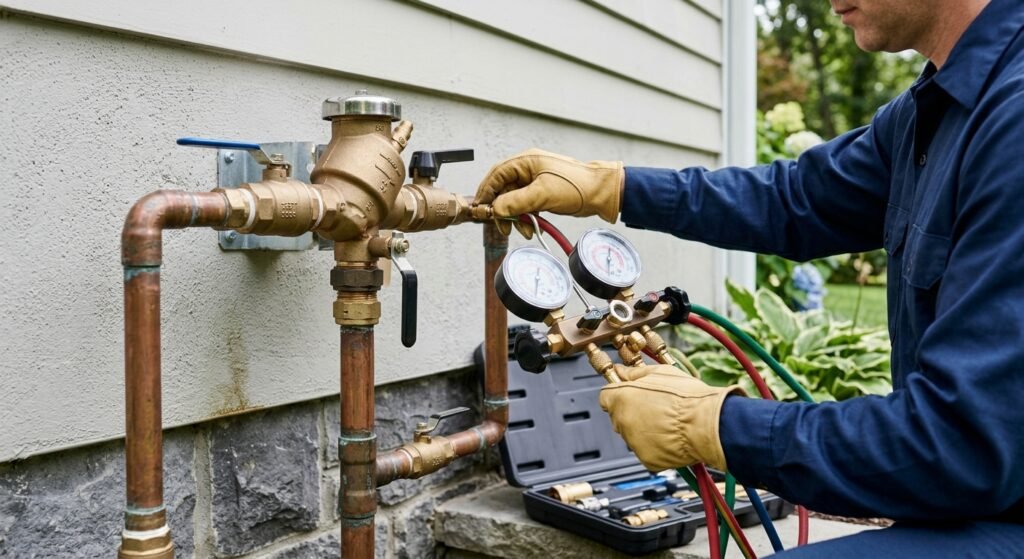
Step 3: Arrange a Professional Inspection or Test
Visual inspection can identify obvious problems, but it cannot replace proper performance testing.
A professional backflow inspection can evaluate the device, pressure conditions, valves, and other relevant components using appropriate equipment.
Step 4: Repair the Device When Appropriate
If testing or inspection identifies a repairable problem, the assembly may be serviced rather than replaced.
Backflow Repair Services can address problems involving components such as valves, seals, relief valves, corrosion, leaks, and other mechanical issues.
Step 5: Replace the Device When Necessary
Replacement may be considered when the existing assembly is severely damaged, repeatedly fails testing, has significant corrosion, is outdated, or is otherwise unsuitable for the application.
Replacement should be based on the condition and requirements of the specific system rather than on one symptom alone.
Backflow Repair vs. Replacement: Which One Is Needed?
Homeowners often assume that a failed backflow preventer automatically requires replacement.
That is not always the case.
A professional evaluation may consider:
- Type of backflow assembly
- Overall device condition
- Internal component condition
- Extent of corrosion
- Availability of repair parts
- Previous repairs
- Repeated test failures
- Installation configuration
- Applicable requirements
If the assembly has serviceable components and remains suitable for the application, repair may be practical.
If it has extensive deterioration, significant damage, recurring failures, or other concerns, replacement may be considered.
The basic decision process should be:
Symptom → Inspection → Testing → Diagnosis → Repair or Replacement → Retesting
This approach helps avoid replacing equipment unnecessarily while also preventing a serious problem from being overlooked.
Seasonal Backflow Preventer Problems in West Chester, PA
West Chester homeowners should pay particular attention to outdoor plumbing equipment as seasons change.
Winter: Watch for Freezing Damage
Cold weather can create problems for exposed water equipment.
After freezing temperatures, look for:
- Cracks
- Leaks
- Damaged fittings
- Unusual discharge
- Changes in system performance
Spring: Check Irrigation Systems
When irrigation systems are restarted after winter, homeowners may notice leaks, pressure changes, or other problems that were not apparent while the system was inactive.
This can be a good time to visually inspect the backflow assembly and arrange required testing.
Summer: Monitor Active Water Systems
Irrigation systems may operate more frequently during warmer months. Pay attention to unexpected leakage, pressure changes, or unusual operation.
Fall: Prepare for Colder Weather
Before winter arrives, make sure outdoor plumbing and backflow equipment receive appropriate attention according to the device and system requirements.
How Often Should a Backflow Preventer Be Tested?
Testing frequency depends on the device, application, property, water system, and applicable requirements.
Many backflow prevention assemblies are tested annually, but homeowners should follow the requirements that apply to their specific system and local water authority.
Regular testing can identify deterioration or malfunction before a small mechanical issue becomes a larger water-safety or compliance concern.
Testing is also different from simply looking at the device.
A homeowner can identify visible warning signs, but proper performance testing requires appropriate equipment and qualified personnel where required.
When Should a West Chester Homeowner Call a Backflow Professional?
Professional evaluation is worth considering when:
- Your backflow preventer is leaking
- Water is continuously discharging
- You see significant corrosion
- A component appears damaged
- Your device has failed testing
- You notice recurring pressure problems
- The assembly makes unusual sounds
- Freezing may have damaged the device
- The same problem keeps returning
The earlier a potential problem is properly identified, the easier it can be to determine whether the appropriate solution is maintenance, repair, testing, or replacement.
Backflow Services for West Chester, PA Homeowners
If you suspect that your backflow preventer is not operating correctly, Professional Backflow Solutions provides backflow services for residential and commercial properties in West Chester, PA.
Available services include:
- Backflow testing
- Backflow inspection
- Backflow repair
- Backflow installation
- Backflow prevention services
- Emergency backflow services
The company’s testing service covers common assemblies such as PVB, DCVA, and RPZ devices and can help identify conditions requiring maintenance, repair, or replacement.
For repair needs, technicians evaluate the assembly and related components to determine the appropriate solution based on the device’s condition.
If you need professional assistance with a suspected problem, start with an appropriate inspection or test rather than assuming that a particular symptom means the entire device has failed.
Frequently Asked Questions About Failing Backflow Preventers
What are the most common symptoms of a failing backflow preventer?
Common warning signs can include water leakage, continuous discharge, unusual pressure changes, visible corrosion or damage, unusual noises, and a failed backflow test. These symptoms do not always prove that the device has failed, so professional evaluation may be necessary.
Why is my backflow preventer leaking water?
A leak can have several possible causes, including worn seals, valve problems, pressure conditions, damaged components, debris, or deterioration. The location and severity of the leak should be evaluated before deciding whether repair or replacement is needed.
What does it mean when a backflow preventer fails a test?
A failed test indicates that the assembly did not meet the applicable performance criteria during testing. Depending on the cause and condition of the device, it may require cleaning, adjustment, repair, component replacement, or complete replacement.
Can a failing backflow preventer cause low water pressure?
A backflow device can sometimes be associated with pressure problems, but low water pressure has many possible causes. Plumbing restrictions, valves, fixtures, supply conditions, and other equipment can also affect pressure. Proper diagnosis is important.
Should I repair or replace my backflow preventer?
The decision depends on the device’s condition, type, repair requirements, component availability, previous failures, corrosion, and overall performance. A professional evaluation can help determine whether repair or replacement is appropriate.
How often should a backflow preventer be tested?
Testing frequency depends on the property, device, application, water system, and applicable requirements. Many assemblies are tested annually, but property owners should follow the requirements applicable to their specific system.
Can freezing temperatures damage a backflow preventer?
Yes, exposed water-containing components can potentially be damaged by freezing conditions. Homeowners should look for leaks, cracks, or unusual operation after severe cold weather and arrange professional evaluation if damage is suspected.
Can I test my backflow preventer myself?
Visual checks can help identify obvious problems, but formal backflow performance testing requires appropriate testing equipment and qualified personnel where required. A visual inspection is not a substitute for a proper backflow test.
How long does a backflow preventer last?
There is no single lifespan that applies to every backflow preventer. Service life depends on the device type, water conditions, installation, maintenance, environment, component condition, and frequency of use.
What should I do after my backflow preventer fails testing?
Start by reviewing the test results and having the assembly professionally evaluated. The device may need cleaning, adjustment, repair, component replacement, or complete replacement. Appropriate retesting should follow repairs when required.
Final Thoughts
A backflow preventer can provide an important layer of protection for a property’s potable water system, but like other mechanical plumbing equipment, it can develop problems over time.
The most useful approach is to recognize potential warning signs without jumping to conclusions.
Leaks, continuous discharge, pressure changes, corrosion, unusual noises, and failed tests can all be reasons to investigate a backflow prevention assembly. However, proper testing and inspection are needed to determine whether the device is actually malfunctioning and what solution is appropriate.
For homeowners in West Chester, PA, staying proactive with inspection, testing, maintenance, and necessary repairs can help keep a backflow prevention system functioning as intended.