A backflow preventer plays an important role in protecting your home’s potable water supply from unwanted reverse flow. Like other plumbing components, it needs attention to remain in good working condition. A device that is damaged, leaking, frozen, or not properly tested may not provide the protection your water system requires.
For homeowners in West Chester, Pennsylvania, regular backflow maintenance is especially important when a property has an irrigation system, outdoor plumbing connections, or other potential cross-connections.
The good news is that maintaining a backflow prevention device does not have to be complicated. A simple routine of visual checks, seasonal care, professional inspection, and required testing can help identify problems before they become larger issues.
This backflow preventer maintenance checklist explains what West Chester homeowners should look for, what professional testing involves, and when it makes sense to call a qualified backflow professional.
What Is a Backflow Preventer?
A backflow preventer is a plumbing device designed to help stop water from flowing backward into a potable water supply.
Normally, water travels in the intended direction through a plumbing system. However, changes in water pressure can sometimes create conditions where water moves in reverse. This is known as backflow.
A cross-connection can create a pathway between potable water and another source that could contain contaminants. For example, an irrigation system, hose connection, or certain plumbing equipment may create a potential cross-connection.
Backflow prevention devices are designed to reduce this risk and help protect drinking water.
Homeowners who want to understand the broader role of these devices can learn more about backflow testing services and how professional testing helps evaluate a testable assembly.
Why Backflow Preventer Maintenance Matters for West Chester Homes
Backflow prevention is ultimately about protecting the quality of the water entering your home.
A problem with a backflow preventer does not always announce itself with an obvious failure. A device may develop corrosion, damaged components, leaks, or other problems that require professional attention.
Maintenance can help homeowners identify visible concerns early.
Common residential situations that may involve backflow protection include:
- Lawn irrigation and sprinkler systems
- Outdoor hose connections
- Pools and related equipment
- Fertilizer or pesticide applications
- Boilers and other plumbing equipment
- Specialized water-use systems
- Plumbing connections that could create a cross-connection
Regular attention is also useful for keeping maintenance records and staying aware of testing requirements that may apply to your property.
Backflow Preventer Maintenance Checklist
Use the following checklist as a practical starting point for routine homeowner awareness. Remember that a visual check is not the same as professional backflow testing.
1. Locate Your Backflow Preventer
Before you can maintain a device, you need to know where it is.
Depending on the plumbing configuration, a residential backflow preventer may be located near an irrigation system, outside the home, near the water service, or around specific plumbing equipment.
If you are unsure which component is the backflow prevention device, avoid opening, adjusting, or disassembling plumbing components simply to identify them.
Knowing the device’s location also makes it easier to check for visible problems and provide access when a professional inspection or test is scheduled.
2. Look for Visible Physical Damage
Start with a simple visual inspection.
Look for:
- Cracked components
- Bent or damaged fittings
- Missing covers
- Impact damage
- Loose-looking connections
- Broken protective components
Physical damage can affect how a backflow prevention assembly performs.
If you notice obvious damage, have the device evaluated rather than attempting to repair internal components yourself.
3. Check for Water Leaks
A small leak should not automatically be dismissed as harmless.
Look around the assembly for:
- Persistent dripping
- Standing water
- Damp connections
- Water around fittings
- Unusual discharge
- Moisture that repeatedly returns
A leaking backflow preventer may require inspection to determine the underlying cause.
If a device has a persistent leak or has stopped functioning correctly, professional backflow repair services can help determine whether the assembly can be repaired or needs replacement.
4. Inspect for Corrosion and Rust
Outdoor plumbing components can be exposed to moisture, temperature changes, and other environmental conditions.
Check for visible:
- Rust
- Corrosion
- Deteriorating fittings
- Mineral buildup
- Discolored components
Surface corrosion does not necessarily mean the entire device has failed, but significant deterioration deserves professional evaluation.
Do not scrape, paint, or modify critical components simply to make the device look better. The condition and operation of the assembly are more important than appearance.
5. Look at the Shut-Off Valves
Many backflow assemblies have shut-off valves associated with the device.
During a visual check, look for obvious:
- Leaks
- Physical damage
- Corrosion
- Broken handles
- Damaged connections
Homeowners should be cautious about manipulating valves without understanding how their plumbing system operates. An incorrect adjustment can interrupt water service or create another problem.
When a valve or related component needs professional attention, a qualified technician can evaluate the complete assembly rather than treating one visible symptom in isolation.
6. Keep the Area Around the Device Accessible
A backflow preventer should not be hidden behind landscaping, storage, debris, or other obstacles.
Keep the surrounding area reasonably clear so the device can be:
- Visually inspected
- Professionally tested
- Repaired when necessary
- Accessed during an emergency
- Maintained without unnecessary delays
This is particularly useful for outdoor irrigation backflow assemblies.
If landscaping has grown around the device, carefully clear the surrounding area without damaging the assembly or connected piping.
7. Protect the Device From Freezing
Cold weather can create serious problems for water-filled plumbing components.
Outdoor backflow assemblies may be vulnerable to freezing temperatures, particularly when they are exposed or improperly winterized.
Before cold weather arrives, homeowners should understand how their irrigation and backflow system is designed to be winterized.
After a severe freeze, inspect the area for visible cracks, leaks, or other signs of damage. Do not assume a device is operating properly simply because it looks normal from the outside.
A professional backflow inspection can help identify problems that may not be obvious during a basic visual check.
8. Check Irrigation System Connections
Residential irrigation systems are an important area of backflow prevention because they can create cross-connection risks.
Pay attention to:
- Sprinkler system connections
- Irrigation piping
- Outdoor hose connections
- Seasonal irrigation startup
- Seasonal irrigation shutdown
- Visible leaks around the backflow assembly
When an irrigation system is installed, modified, or repaired, the associated backflow protection should also be considered.
If your property is adding or changing an irrigation-related plumbing connection, professional backflow preventer installation can help ensure the appropriate assembly is considered for the application.
9. Schedule Required Backflow Testing
One of the most important points for homeowners to understand is that maintenance and testing are not the same thing.
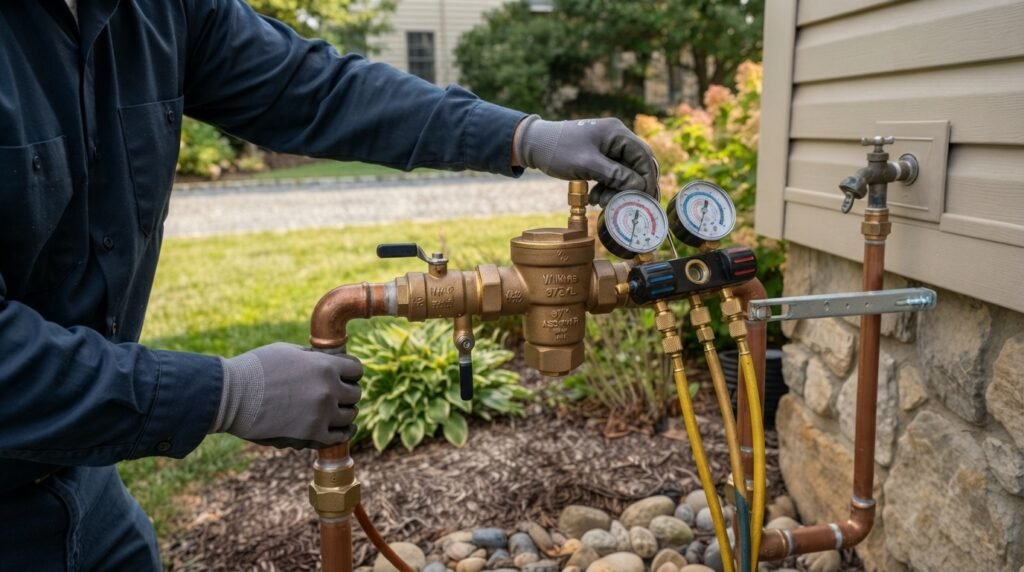
A homeowner can visually inspect a device for obvious problems, but that does not replace professional testing of a testable backflow assembly.
Testing uses appropriate procedures and equipment to evaluate whether the assembly is functioning as intended.
Testing frequency and requirements can depend on the type of assembly, water system, and applicable local requirements. Homeowners should follow the requirements that apply to their specific property rather than assuming that every backflow device has exactly the same testing schedule.
For properties with a testable assembly, keeping track of testing dates can prevent missed requirements and make property maintenance easier.
10. Keep Your Backflow Testing Records
Do not throw away old testing and repair documentation.
Keep records such as:
- Testing reports
- Inspection information
- Repair invoices
- Replacement details
- Testing dates
- Device information
- Maintenance notes
A record of previous service can help a technician understand the history of the assembly and can make future maintenance easier.
It is also useful when a property changes ownership or when a water-system requirement calls for documentation.
Seasonal Backflow Preventer Maintenance Checklist
Backflow maintenance should not be treated as a once-a-year activity. Different seasons can create different concerns.
Spring Backflow Maintenance
Spring is a good time to look over outdoor plumbing after winter.
Check for:
- Freeze-related damage
- Cracks
- Leaks
- Corrosion
- Damaged irrigation connections
- Problems around outdoor backflow assemblies
If your irrigation system is being restarted, make sure the backflow protection is also considered before regular watering begins.
Summer Backflow Maintenance
During summer, periodically watch for changes around outdoor plumbing.
Look for:
- Unexpected leaks
- Water discharge
- Corrosion
- Damaged components
- Problems associated with irrigation use
Heavy landscaping activity can also accidentally damage exposed plumbing components, so keep an eye on devices located near lawns, gardens, or other outdoor work areas.
Fall Backflow Maintenance
Fall is a useful time to prepare outdoor plumbing for colder weather.
Inspect the device and surrounding plumbing before temperatures drop. If your irrigation system requires seasonal shutdown or winterization, make sure the backflow assembly is addressed as part of that process.
Taking care of visible problems before winter can help prevent avoidable damage.
Winter Backflow Maintenance
During winter, pay particular attention to exposed plumbing.
If freezing conditions occur, watch for:
- Cracks
- Leaks
- Damaged fittings
- Unexpected water discharge
If you suspect freeze damage, avoid assuming the assembly is safe to use simply because the water is flowing. Have the system evaluated when necessary.
Signs Your Backflow Preventer Needs Professional Attention
Not every backflow problem is obvious, but certain warning signs deserve attention.
Contact a qualified professional if you notice:
- Persistent leaking
- Visible physical damage
- Significant corrosion
- Freeze damage
- Unusual water pressure
- Water discharge from the assembly
- A failed backflow test
- Repeated device problems
- Damaged valves or fittings
- Problems after plumbing or irrigation modifications
Water discoloration, unusual taste, or an unusual odor can have many possible causes and should not automatically be attributed to a backflow preventer. However, unexplained changes in water quality should be taken seriously and evaluated appropriately.
What Should You Do If Your Backflow Preventer Fails a Test?
A failed test does not necessarily mean the entire device must be replaced.
The appropriate next step is to determine why the assembly failed.
A typical service process may involve:
- Reviewing the test results.
- Inspecting the assembly and surrounding plumbing.
- Identifying the component or condition causing the failure.
- Repairing or rebuilding the device when appropriate.
- Replacing the assembly when repair is not suitable.
- Retesting when required.
- Keeping updated documentation.
The correct solution depends on the device, its condition, the application, and applicable requirements.
Avoid attempting to bypass or disable a backflow prevention device simply because it is leaking or has failed a test. The device exists to provide a specific water-safety function.
Backflow Preventer Maintenance vs. Backflow Testing
These terms are often used interchangeably, but they describe different activities.
Maintenance focuses on keeping the device and its surrounding components in appropriate condition.
Inspection involves evaluating the condition of the device and looking for problems.
Testing uses appropriate testing procedures and equipment to evaluate the performance of a testable backflow assembly.
Repair addresses a problem that has been identified.
Installation involves selecting and installing an appropriate backflow prevention assembly for a particular application.
Understanding these differences helps homeowners know why a quick visual check cannot replace required professional testing.
Common Types of Backflow Preventers Homeowners May Encounter
The type of backflow prevention assembly installed at a property depends on the application and the level of protection required.
Pressure Vacuum Breaker (PVB)
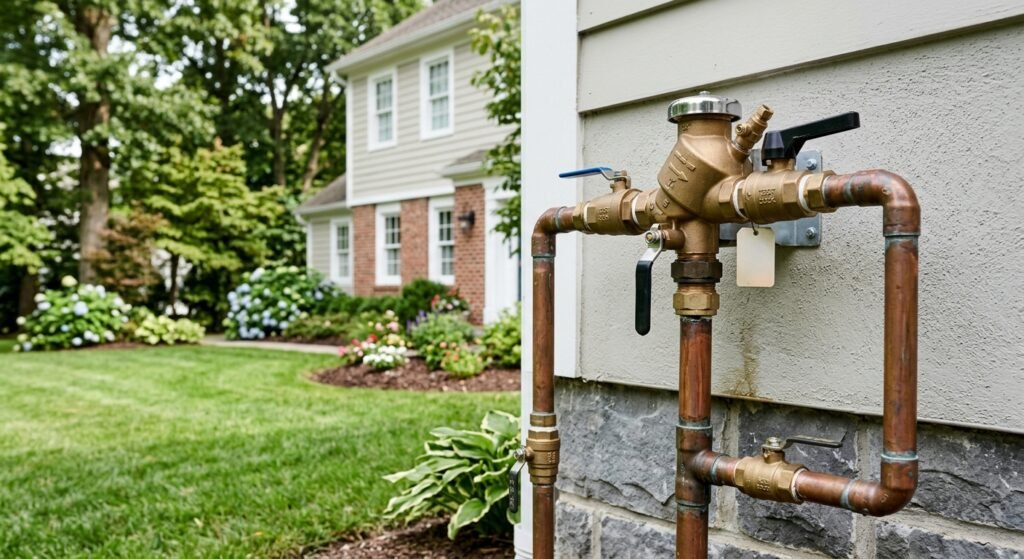
A Pressure Vacuum Breaker, commonly called a PVB, is a backflow prevention assembly often associated with irrigation applications.
Homeowners may encounter PVB assemblies near lawn sprinkler systems and other outdoor water connections.
Because the assembly can be exposed to outdoor conditions, homeowners should pay attention to leaks, physical damage, corrosion, and freezing concerns.
Double Check Valve Assembly (DCVA)
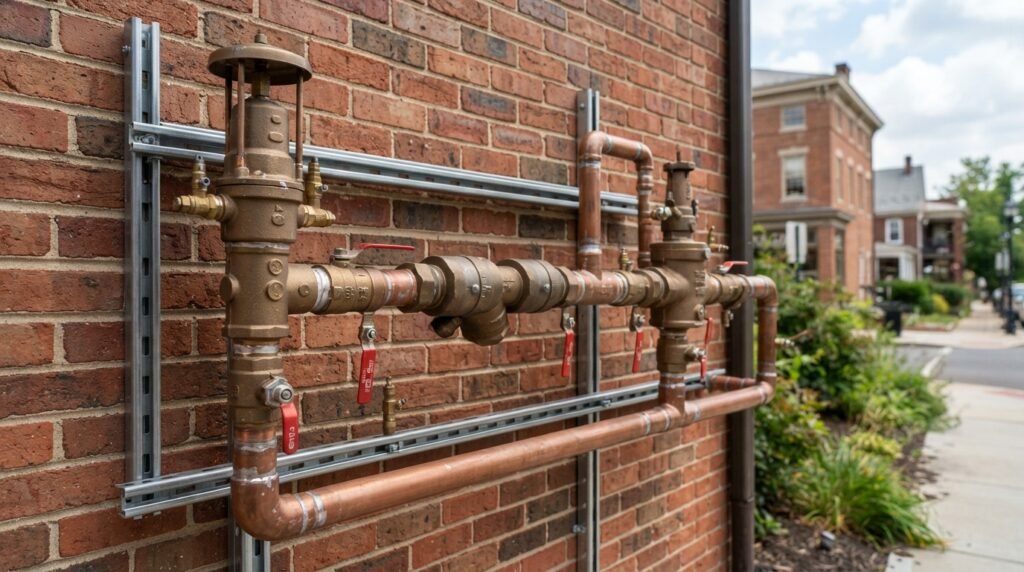
A Double Check Valve Assembly, or DCVA, uses check valves to help prevent reverse flow.
The exact application and protection requirements determine whether this type of assembly is appropriate.
As with other testable devices, proper maintenance and testing are important when required.
Reduced Pressure Zone (RPZ) Assembly
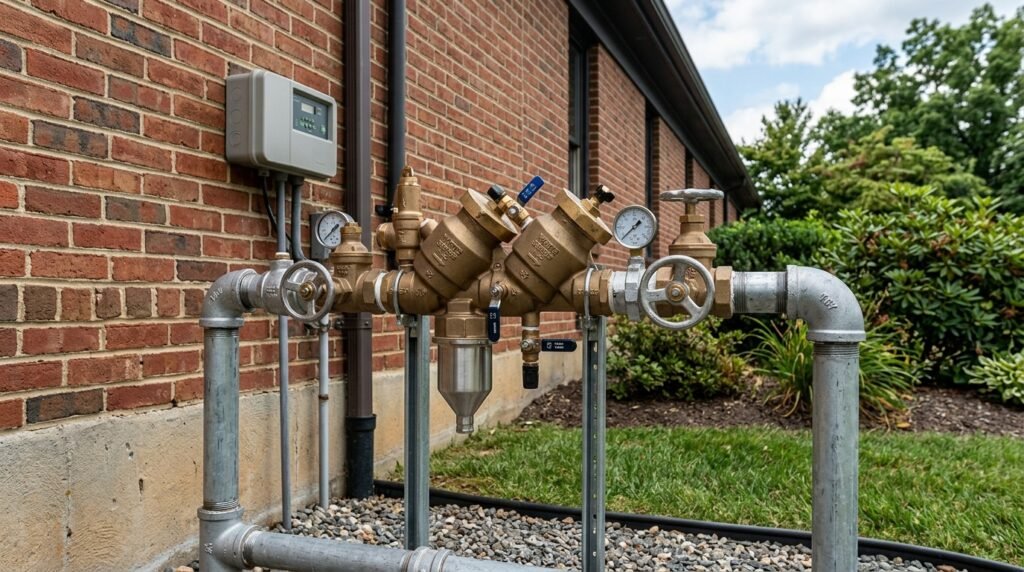
A Reduced Pressure Zone assembly, commonly called an RPZ, provides a higher level of backflow protection for applications where the potential hazard requires it.
RPZ assemblies have additional components that require proper inspection and testing.
Homeowners should not assume that one type of backflow preventer can simply be substituted for another. The appropriate assembly depends on the plumbing application and applicable requirements.
Common Backflow Maintenance Mistakes Homeowners Should Avoid
A few simple mistakes can make backflow problems harder to manage.
Ignoring Small Leaks
A recurring drip may indicate a problem that deserves attention. Do not wait for a minor leak to become a major plumbing issue.
Treating Visual Inspection as Testing
Looking at a device can identify obvious damage, but it does not demonstrate that a testable assembly is performing correctly.
Blocking Access to the Assembly
Landscaping, storage, or construction materials can make testing and repairs unnecessarily difficult.
Attempting Technical Repairs Without Proper Knowledge
Backflow prevention devices are part of a water-protection system. Disassembling or modifying components without appropriate knowledge can create additional problems.
Forgetting Seasonal Maintenance
Outdoor devices can be affected by freezing temperatures, irrigation changes, and landscaping activity.
Losing Testing Records
Keeping service records provides useful information for future maintenance and helps homeowners understand the history of their backflow assembly.
When Should You Call a Backflow Professional?
Professional assistance makes sense when a backflow preventer has a persistent leak, visible damage, corrosion, freeze damage, a failed test, or another issue that cannot be safely evaluated through a basic visual check.
You may also want professional assistance when:
- Installing a new irrigation system
- Modifying existing plumbing
- Replacing an old backflow assembly
- Investigating repeated device failures
- Preparing for required testing
- Repairing a damaged valve
- Addressing an unexpected backflow-related problem
A qualified professional can evaluate the complete system rather than focusing only on the symptom that is easiest to see.
For homeowners who need a more detailed evaluation, backflow device testing can help assess the performance of a testable assembly using appropriate procedures and equipment.
A Simple Year-Round Backflow Maintenance Routine
You do not need to spend hours maintaining your backflow preventer.
A simple routine can help you stay aware of its condition:
Routine checks: Look for visible leaks, damage, corrosion, or blocked access.
Spring: Check for winter damage and inspect irrigation connections before seasonal use.
Summer: Watch for leaks and damage around outdoor plumbing and irrigation equipment.
Fall: Prepare applicable outdoor systems for colder weather.
Winter: Pay attention to exposed plumbing during freezing conditions.
When testing is due: Arrange appropriate professional testing according to the requirements that apply to your property.
After a problem: Have the assembly evaluated, repaired or replaced when appropriate, and retested when required.
This simple approach can help homeowners identify concerns earlier and maintain better records of their property’s water-protection system.
Backflow Maintenance Services in West Chester, PA
Backflow prevention is an important part of maintaining a safe and reliable water system. While homeowners can perform basic visual checks, professional testing, inspection, repair, and installation require appropriate knowledge and equipment.
Professional Backflow Solutions provides backflow services for residential and commercial properties in West Chester, PA and surrounding communities. Services include testing, inspection, installation, repair, and emergency backflow assistance.
If your backflow preventer is leaking, damaged, due for testing, or has failed a test, getting the issue evaluated can help you understand what needs to be done next.
For homeowners who need backflow testing in West Chester, PA, Professional Backflow Solutions provides professional service focused on water protection, accurate testing, and dependable solutions.
Frequently Asked Questions About Backflow Preventer Maintenance
How often should a residential backflow preventer be maintained?
Routine visual checks can help homeowners identify obvious problems such as leaks, corrosion, or physical damage. Professional testing and inspection should follow the requirements applicable to the specific device and property.
Does a backflow preventer need annual testing in West Chester, PA?
Testing requirements can depend on the type of backflow assembly, water system, and applicable local requirements. Homeowners with testable assemblies should follow the testing schedule that applies to their property rather than assuming a universal schedule.
What are the signs of a failing backflow preventer?
Common warning signs can include persistent leaks, visible corrosion, physical damage, unusual discharge, freeze damage, or a failed professional test. Any unexplained water-system problem should be evaluated appropriately.
Can I inspect my backflow preventer myself?
Homeowners can perform basic visual checks for obvious damage, leaks, corrosion, and blocked access. However, visual inspection does not replace professional testing of a testable backflow assembly.
How do I protect my backflow preventer from freezing?
Outdoor systems should be properly winterized according to their design and application. Before freezing weather, homeowners should understand how the connected irrigation or plumbing system should be prepared. Suspected freeze damage should be professionally evaluated.
What should I do if my backflow preventer fails a test?
Have the assembly evaluated to identify the reason for failure. Depending on its condition, the device may be repairable or may need replacement. After appropriate work, retesting and documentation may be required.
How long does a backflow preventer last?
There is no single lifespan that applies to every backflow preventer. Service life can depend on the device type, installation conditions, water quality, environmental exposure, maintenance, and component wear.
Can a leaking backflow preventer be repaired?
Some backflow assemblies can be repaired or rebuilt when suitable parts and repair procedures are available. Other devices may be better candidates for replacement. A professional evaluation can determine the appropriate option.
Why is backflow testing different from backflow inspection?
An inspection generally evaluates the condition of the device and looks for problems, while testing uses appropriate procedures and equipment to evaluate the performance of a testable backflow prevention assembly.
Does my irrigation system need backflow protection?
Irrigation systems can create cross-connection risks, so appropriate backflow protection may be required depending on the system design and applicable requirements. A qualified professional can evaluate the application.
When should I replace a backflow preventer instead of repairing it?
Replacement may be appropriate when an assembly is severely damaged, excessively corroded, repeatedly failing, unsuitable for the application, or not reasonably repairable. The condition and application should be evaluated before making that decision.
Final Takeaway
A backflow preventer is a small but important part of a home’s water-protection system. Regular visual checks, seasonal awareness, professional inspection, required testing, and timely repairs can help West Chester homeowners stay ahead of potential problems.
The most important step is not waiting until a leak, failed test, or damaged assembly becomes an emergency. Keep the device accessible, watch for warning signs, maintain your records, and arrange professional service when the system needs more than a basic visual check.
For homeowners in West Chester, PA, maintaining your backflow prevention system is ultimately about protecting your water supply and understanding the condition of the equipment designed to protect it.