Backflow prevention is an important part of maintaining safe drinking water in residential and commercial properties. However, when a property is rented, one common question often arises: Who is responsible for backflow testing, the landlord or the tenant?
The answer can depend on several factors, including property ownership, water supplier requirements, the type of backflow prevention device, and the terms of the rental agreement. In many situations, the property owner or water customer is responsible for ensuring that required backflow testing is completed. However, tenants may also have responsibilities related to property access, maintenance communication, and lease agreements.
For landlords, tenants, and property managers in West Chester, PA, understanding these responsibilities can help prevent missed testing deadlines, unnecessary disputes, and potential water safety concerns.
This guide explains how backflow testing responsibilities are generally handled, what Pennsylvania regulations say, and how rental property owners can keep their backflow prevention systems properly maintained.
Understanding Backflow Testing and Why Rental Properties Need It
Before discussing who should arrange and pay for testing, it is important to understand what backflow prevention is and why it matters.
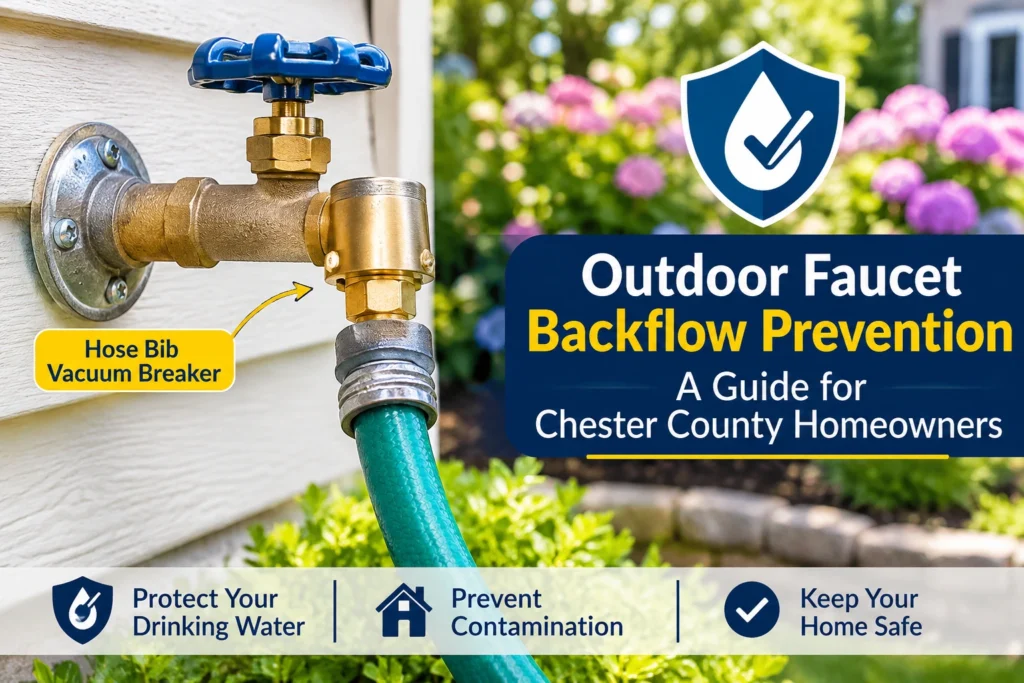
Backflow occurs when water flows in the opposite direction from its intended path. This can allow contaminated water from plumbing connections, irrigation systems, or other sources to enter a clean drinking water supply.
A backflow preventer is designed to reduce this risk by preventing unwanted reverse water flow. These devices are particularly important in properties where plumbing systems connect to irrigation equipment, commercial operations, fire protection systems, and other potential contamination sources.
What Is a Backflow Preventer?
A backflow preventer is a plumbing safety device installed to protect potable water systems from contamination caused by reverse water flow.
Several types of backflow prevention assemblies are commonly used in residential and commercial properties.
Reduced Pressure Zone (RPZ): An RPZ assembly provides a high level of protection against certain backflow hazards and is commonly used in higher-risk applications.
Double Check Valve Assembly (DCVA): A DCVA uses two independently operating check valves to help prevent contaminated water from flowing backward into the drinking water supply.
Pressure Vacuum Breaker (PVB): A PVB helps protect against backsiphonage and is frequently used in irrigation and sprinkler systems.
The appropriate device depends on the property’s plumbing arrangement and the potential contamination hazard.
Why Is Regular Backflow Testing Important?
Installing a backflow preventer is not enough to guarantee long-term protection. Internal components can wear down, become damaged, or stop functioning correctly.
Regular testing helps identify potential problems before they become more serious.
Some important benefits include:
- Protecting drinking water: Helps prevent contaminated water from entering potable water lines.
- Identifying mechanical problems: Detects issues involving check valves, relief valves, and other internal components.
- Maintaining compliance: Helps property owners meet applicable water supplier testing requirements.
- Reducing unexpected expenses: Identifies problems that may require repair before they become more complicated.
- Maintaining property safety: Helps ensure that backflow prevention equipment continues operating as intended.
For landlords and tenants, maintaining these systems is an important part of responsible property management.
Who Is Responsible for Backflow Testing: Landlord or Tenant?
In many rental property situations, the landlord or property owner coordinates required backflow testing because the device is part of the property’s plumbing protection system.
However, responsibility is not always identical across every rental arrangement.
The water supplier may recognize the property owner, account holder, or another customer as responsible for meeting applicable backflow prevention requirements. Meanwhile, the lease may separately establish how maintenance expenses are divided between the landlord and tenant.
Understanding these differences is important when deciding who should schedule testing, arrange repairs, and pay for the service.
Landlord Responsibilities for Backflow Testing
Landlords generally have an important role in maintaining the plumbing systems and safety equipment associated with their rental properties.
Depending on the applicable requirements and rental agreement, their responsibilities may include:
- Ensuring required backflow prevention equipment is installed.
- Arranging testing when the property owner is responsible for compliance.
- Hiring a qualified backflow testing professional.
- Responding to water supplier testing notifications.
- Addressing failed test results and arranging necessary repairs.
- Maintaining copies of testing reports and maintenance records.
- Ensuring that applicable testing deadlines are not overlooked.
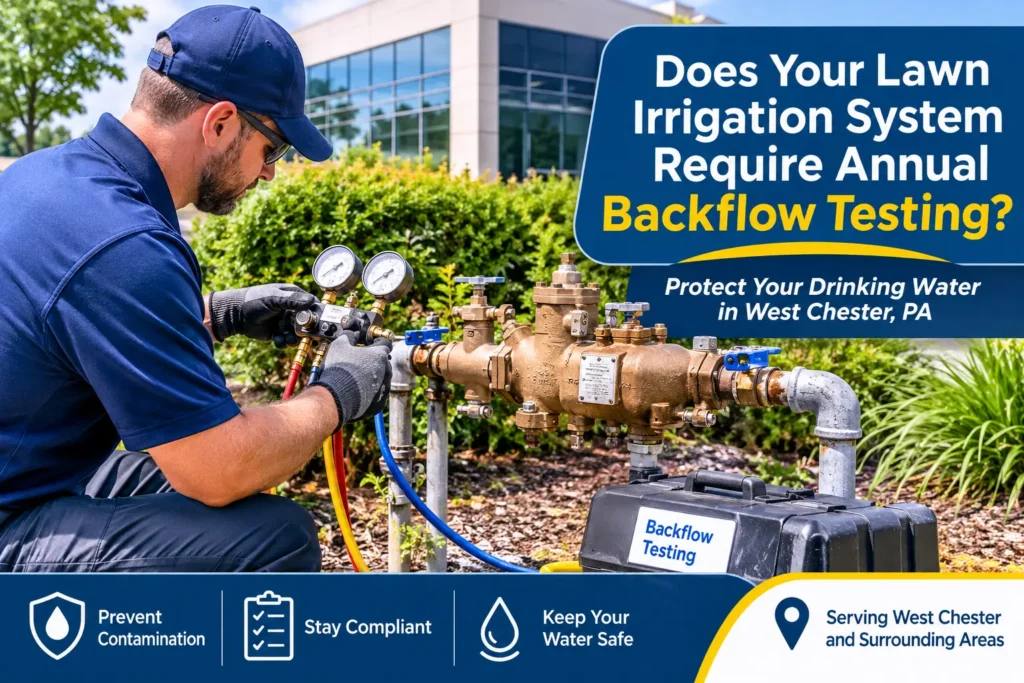
For example, a landlord renting out a single-family home in West Chester, PA, may have a backflow prevention assembly connected to the property’s irrigation system. If the water supplier requires annual testing, the landlord should establish a process to ensure that the requirement is addressed.
A property manager may coordinate the appointment, but the owner should understand who is responsible for meeting the applicable requirements.
Tenant Responsibilities for Backflow Testing
Tenants may not automatically be responsible for arranging backflow testing, but they can still play an important role in maintaining the property’s water protection system.
Depending on the lease agreement, tenants may be expected to:
- Provide reasonable access for scheduled plumbing inspections and testing.
- Notify the landlord about visible leaks or damaged backflow equipment.
- Forward backflow testing notices received at the property.
- Report unusual water pressure or plumbing problems.
- Follow agreed maintenance and property care requirements.
- Avoid modifying or disconnecting backflow prevention equipment without authorization.
For example, if a tenant notices water leaking from an outdoor backflow preventer, they should promptly inform the landlord or property manager.
Ignoring visible problems can make maintenance more difficult and may create unnecessary water safety concerns.
Can a Landlord Make a Tenant Pay for Backflow Testing?
This is one of the most common questions involving rental property maintenance.
A landlord and tenant may agree to allocate certain maintenance expenses through their lease agreement. However, the existence of a lease clause does not automatically change the responsibility recognized by the water supplier.
Before deciding who should pay, both parties should review:
- The rental agreement and maintenance clauses.
- The property’s water account information.
- Applicable water supplier backflow testing requirements.
- Any relevant local regulations.
- Whether testing is part of routine property maintenance or connected to a tenant-specific system.
For example, a commercial lease may assign certain maintenance costs to the tenant. However, the water supplier may still require the recognized water customer or property owner to ensure that the backflow testing requirement is satisfied.
When there is uncertainty, landlords and tenants should review their agreement and seek appropriate legal guidance rather than assuming that one party automatically carries every responsibility.
What Does Pennsylvania Say About Backflow Testing Responsibility?
Pennsylvania has regulations addressing cross-connections and backflow prevention to help protect public drinking water supplies.
One important regulation is Pennsylvania Code, Title 25, Chapter 109, Section 109.709, which addresses cross-connection control programs.
Under this regulation, water system customers are responsible for eliminating cross-connections or providing acceptable backflow protection.
Water suppliers can establish procedures for identifying potential cross-connections, requiring appropriate protective devices, and monitoring compliance.
Failure to comply with applicable requirements may result in water service discontinuation after reasonable notice.
Understanding Pennsylvania Code §109.709
Pennsylvania Code §109.709 is particularly relevant to property owners and water customers because it establishes responsibilities related to cross-connection control.
For rental properties, it is important to understand that the water supplier’s compliance requirements and the financial arrangements between landlords and tenants are separate matters.
A lease may assign certain maintenance expenses to a tenant, but that does not necessarily transfer the water supplier’s recognized compliance responsibility.
Property owners should review the applicable water supplier requirements to determine:
- Whether the property needs a backflow prevention device.
- Which type of device is approved for the plumbing system.
- Whether periodic testing is required.
- Who must submit the testing documentation.
- What happens if the device fails or testing is overdue.
Do Local Water Suppliers Have Different Backflow Requirements?
Yes. Testing procedures, approved devices, reporting processes, and compliance requirements may vary between water suppliers.
For example, the Bucks County Water and Sewer Authority (BCWSA) provides cross-connection compliance guidance for customers within its service territory.
Its guidance identifies property owners as responsible for ensuring that applicable backflow devices are tested and maintained.
However, not every property in West Chester or Chester County receives water from BCWSA. Property owners should identify their actual water supplier before relying on a particular testing schedule or submission procedure.
Why West Chester Property Owners Should Check Their Water Supplier’s Rules
West Chester and surrounding communities include properties served by different water providers.
A property owner in West Chester may have different testing and documentation procedures from a property owner in Downingtown, Phoenixville, Exton, or another nearby community.
Before scheduling testing, property owners should:
- Identify the water supplier serving the property.
- Review any backflow testing notification received.
- Confirm the required testing frequency.
- Check whether the tester must meet specific certification or approval requirements.
- Understand how completed test reports must be submitted.
Following the correct procedure helps landlords and property managers avoid missed deadlines and unnecessary compliance issues.
Who Handles Backflow Testing in Different Rental Property Situations?
The responsibilities involved in backflow testing can change depending on the type of rental property and how its plumbing system is arranged.
Here are some common situations landlords, tenants, and property managers should understand.
Single-Family Rental Homes
In a single-family rental home, the landlord or property owner will often coordinate required testing for backflow prevention equipment installed as part of the property’s plumbing system.
For example, a home with an irrigation system may have a pressure vacuum breaker that requires periodic testing.
The landlord can arrange the testing appointment and coordinate with the tenant to provide access to the equipment.
Tenants should notify the owner if they receive a testing notice or notice a plumbing problem.
The lease agreement should clearly explain any additional maintenance or payment responsibilities.
Apartment Complexes and Multi-Unit Buildings
Apartment complexes can have more complicated plumbing arrangements because multiple units may share a central water supply and common backflow prevention equipment.
A building may have backflow prevention assemblies serving:
- Main water service connections.
- Irrigation systems.
- Fire sprinkler systems.
- Shared plumbing infrastructure.
- Other building-specific water connections.
In these situations, property owners or management companies commonly coordinate testing and maintenance for shared equipment.
Individual tenants should report plumbing problems and cooperate with reasonable access arrangements when testing or maintenance is necessary.
Commercial Rental Properties
Commercial properties require particular attention because their plumbing systems may support specialized business activities.
Examples include:
- Restaurants and food service establishments.
- Office buildings.
- Retail stores.
- Warehouses.
- Manufacturing facilities.
- Medical and healthcare facilities.
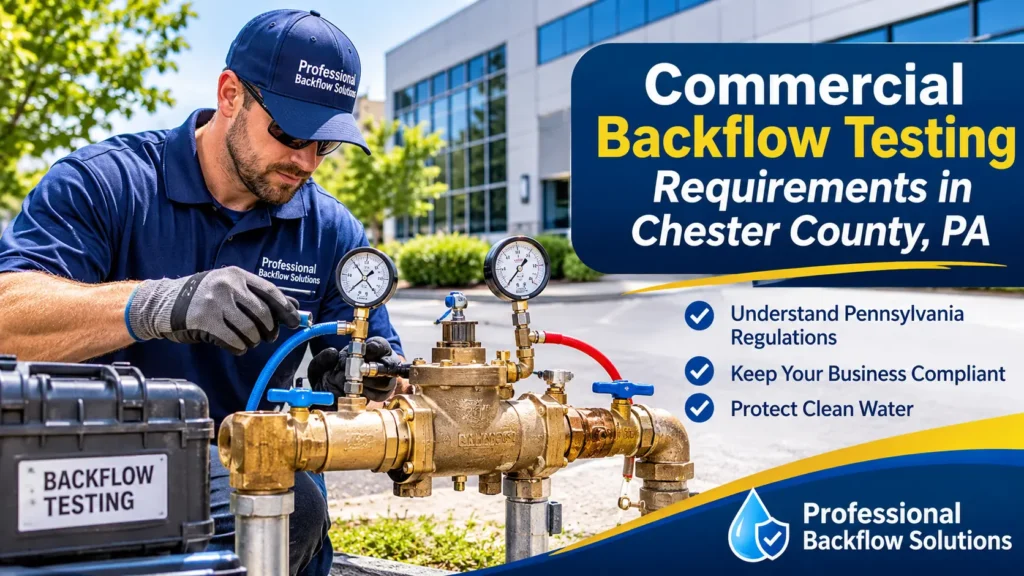
A commercial property may have multiple backflow prevention assemblies protecting different plumbing connections.
For example, a restaurant may have backflow prevention equipment associated with its water supply and other specialized connections.
The landlord, business owner, and property manager should review the lease, water account, device ownership, and applicable water supplier requirements to determine who coordinates testing and pays associated expenses.
Commercial tenants should not assume that the landlord handles every testing requirement, especially when their business operations involve specialized plumbing equipment.
Properties With Irrigation and Fire Sprinkler Systems
Irrigation and fire protection systems may have dedicated backflow prevention assemblies that require separate attention.
A property with an outdoor sprinkler system may use a PVB or another approved assembly, depending on the system’s design and hazard classification.
Fire sprinkler systems may also require backflow protection based on their configuration and applicable requirements.
Landlords and property managers should maintain records of these devices and confirm whether each one has separate testing or documentation requirements.
What Happens If Backflow Testing Is Overdue or the Device Fails?
Missing a required backflow testing deadline or ignoring a failed test can create problems for a rental property.
The exact consequences depend on the water supplier’s requirements and the circumstances of the property.
Consequences of Missing a Required Backflow Test
When a required test is not completed, a water supplier may issue notices requesting testing documentation.
Depending on its procedures and applicable regulations, the supplier may require follow-up action or take additional compliance measures.
Potential problems include:
- Overdue testing notifications.
- Additional compliance follow-up.
- Difficulty maintaining required testing records.
- Potential interruption of water service after applicable notice.
- Uncertainty about whether the backflow prevention device is operating correctly.
Landlords and property managers should avoid waiting until the last minute to arrange testing.
What Happens If a Backflow Preventer Fails Its Test?
A failed backflow test means the device did not meet the required performance criteria during testing.
Common reasons include:
- Worn or damaged check valves.
- Debris inside the assembly.
- Deteriorated internal seals.
- Damaged relief valve components.
- Mechanical wear.
- Pressure-related operating problems.
A failed device may require cleaning, adjustment, repair, or replacement depending on the problem.
After necessary work is completed, additional testing may be required to confirm that the assembly meets the applicable performance requirements.
Property owners can learn more about warning signs in our guide to backflow preventer repair and failure symptoms.
Who Should Arrange Backflow Repair: Landlord or Tenant?
The responsibility for arranging and paying for backflow repairs depends on the lease, ownership arrangements, and applicable water supplier requirements.
In many situations, the landlord or property manager coordinates repairs because the backflow preventer is part of the property’s plumbing infrastructure.
However, commercial lease agreements may establish different maintenance arrangements.
Regardless of who pays, a failed device should not be ignored. Both parties should communicate promptly so that necessary repairs and retesting can be completed.
For additional information, property owners can explore professional backflow repair services.
How Landlords and Tenants Can Avoid Backflow Testing Disputes
Clear communication and organized maintenance records can help prevent unnecessary disagreements between property owners and tenants.
Both parties should understand their responsibilities before a testing notice arrives.
Tips for Landlords
Landlords can make backflow testing easier to manage by following a consistent maintenance process.
- Keep records of installed backflow prevention devices.
- Maintain a calendar of applicable testing deadlines.
- Clearly explain maintenance responsibilities in rental agreements.
- Respond promptly to water supplier notices.
- Arrange testing through qualified professionals.
- Keep copies of completed test reports.
- Address failed test results without unnecessary delays.
For landlords managing several rental properties, maintaining a separate testing record for each address can help prevent missed appointments.
Tips for Tenants
Tenants can also help maintain safe and properly functioning plumbing systems.
- Read the maintenance responsibilities in the lease.
- Inform the landlord when testing notices arrive.
- Provide reasonable access for scheduled appointments.
- Report visible leaks or damaged plumbing equipment.
- Avoid modifying backflow prevention assemblies.
- Keep copies of relevant maintenance communications.
A cooperative approach helps both parties address potential problems before they become more serious.
Create a Backflow Testing and Maintenance Schedule
A simple maintenance schedule can make it easier for landlords and property managers to track testing requirements.
The schedule should include:
- Property address.
- Backflow device location.
- Device type.
- Applicable testing deadline.
- Previous testing date.
- Test results.
- Repair history.
- Next required testing date.
- Water supplier reporting information.
An organized recordkeeping process is especially useful for apartment complexes, commercial buildings, and property management companies responsible for multiple locations.
For more maintenance guidance, read our backflow preventer maintenance checklist for homeowners.
When Should You Hire a Professional Backflow Testing Company in West Chester, PA?
Whether you own a rental home, manage an apartment complex, or operate a commercial building, professional backflow testing can help you understand the condition of your property’s water protection equipment.
You should consider arranging professional testing when:
- Your water supplier sends a backflow testing notice.
- A required testing deadline is approaching.
- Your property’s previous test report shows a failure.
- A backflow preventer has visible leaks or damage.
- You have purchased a property with existing backflow equipment.
- You manage a commercial building with multiple backflow devices.
- You need documentation of completed testing.
Working with a qualified professional helps ensure that testing is performed using appropriate procedures and equipment.
Professional Backflow Testing for Residential and Commercial Properties
Professional Backflow Solutions provides backflow services in West Chester, PA, and surrounding communities.
Our services support residential and commercial property owners who need help maintaining their backflow prevention equipment.
Whether you are a landlord arranging testing for a rental property or a business owner managing commercial plumbing systems, understanding the condition of your backflow preventer is an important part of responsible property maintenance.
Our services include:
- Backflow testing.
- Backflow inspection.
- Backflow repair.
- Backflow installation.
- Commercial backflow services.
If your property needs testing, explore our professional backflow testing services to learn more.
We also provide backflow inspection services to help property owners evaluate their backflow prevention equipment.
Protect your property’s water supply with professional backflow services from Professional Backflow Solutions.
If you own or manage a rental property in West Chester, PA, or nearby communities, contact our team to discuss your backflow testing requirements and schedule the appropriate service.
Frequently Asked Questions About Landlord and Tenant Backflow Testing Responsibilities
1. Is the landlord or tenant responsible for backflow testing?
In many rental properties, the landlord or property owner coordinates required backflow testing because the device is part of the property’s plumbing protection system. However, the water supplier’s requirements and rental agreement should be reviewed to determine who schedules and pays for the service.
2. Can a landlord require a tenant to pay for backflow testing?
A landlord and tenant may agree to allocate certain maintenance expenses through a lease agreement. However, this does not automatically change the responsibility recognized by the water supplier. Both parties should review their agreement and applicable local requirements before deciding who pays.
3. How often should rental properties have backflow testing?
Testing frequency depends on the type of backflow prevention device, applicable regulations, and the water supplier’s cross-connection control program. Some water suppliers require annual testing for applicable devices. Property owners should confirm their specific testing schedule with their water provider.
4. What happens if a tenant refuses access for backflow testing?
The landlord or property manager should communicate the testing requirement, provide appropriate notice, and arrange access according to the lease and applicable Pennsylvania landlord-tenant rules. Delaying required testing may create compliance problems for the property.
5. Who is responsible for backflow repairs in a rental property?
Responsibility for arranging and paying for repairs depends on the lease, ownership arrangements, and applicable requirements. The landlord or property manager should be informed immediately when a backflow device fails its test or shows signs of damage.
6. Are commercial tenants responsible for backflow testing?
Commercial tenants may have maintenance responsibilities under their lease, but the water supplier may recognize the property owner or water customer as responsible for compliance. Businesses and landlords should review the applicable requirements before assigning testing duties.
7. Can a property fail a backflow inspection if its testing is overdue?
An overdue test can result in a compliance issue if the water supplier requires current testing documentation. However, an overdue test and a failed mechanical performance test are different situations. Property owners should address both promptly.
8. Can a landlord hire a professional backflow testing company for a rental property?
Yes. Landlords and property managers can arrange professional backflow testing through a qualified tester who meets the applicable water supplier’s requirements. Professional testing helps identify device problems and provides documentation of the test results.
Final Thoughts
Understanding who is responsible for backflow testing is important for landlords, tenants, and property managers. Although the property owner or water customer often coordinates required testing, the exact responsibilities can depend on the water supplier, rental agreement, and type of backflow prevention system.
For rental properties in West Chester, PA, and surrounding communities, maintaining accurate testing records, communicating clearly, and addressing failed devices promptly can help protect the property’s water supply.
Whether you manage a single-family rental home, an apartment complex, or a commercial property, regular attention to backflow prevention is an important part of responsible property maintenance.
Professional Backflow Solutions is here to help residential and commercial property owners with their backflow testing, inspection, installation, and repair needs.